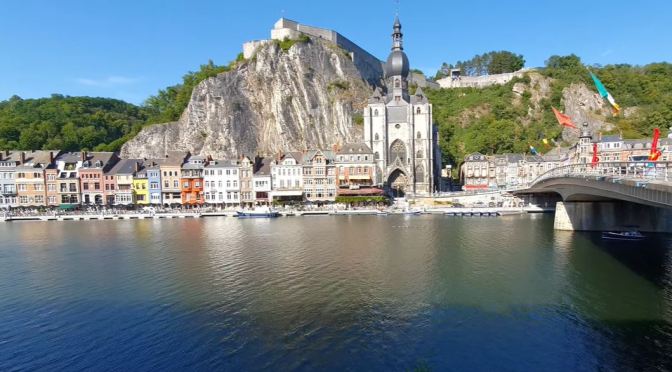
Located in the French-speaking region of Belgium in the south (Wallonia), Dinant is a municipality in Namur that’s located on the River Meuse.
The River Meuse is a major European river that rises from France, flowing through Belgium and the Netherlands until it trickles into the North Sea.
Built in 1815, this fortress overlooks the city of Dinant and is part of the so-called ‘Meuse Citadels’ (with the two others located in Huy and Namur).
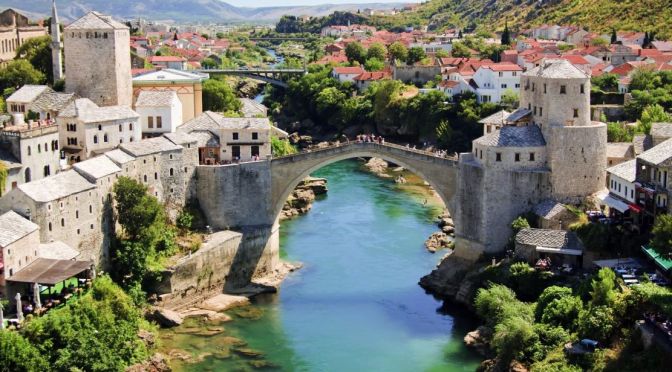
Mostar is a city in southern Bosnia and Herzegovina, straddling the Neretva River. It’s known for the iconic Stari Most (Old Bridge), a reconstructed medieval arched bridge. The nearby alleys are full of shops and market stalls, and the Old Bridge Museum explores the bridge’s long history. A narrow staircase leads up to the Koski Mehmed-Pasha Mosque’s minaret for panoramic city views.
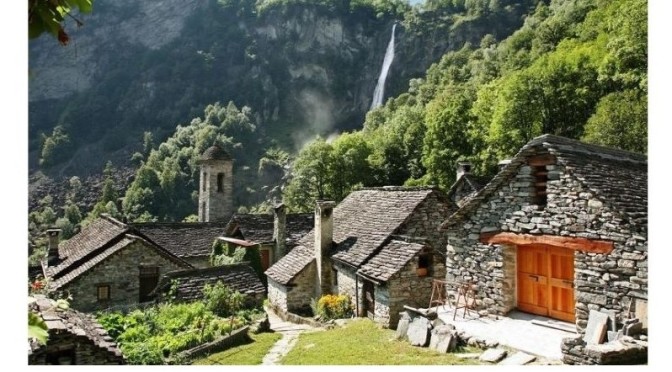
The town of Sonlerto lies in Bavona Valley (Val Bavona), arguably the wildest one among the valleys of Ticino. This spectacular side valley is part of the Maggia Valley. The whole region is part of the Lepontine Alps – a mountain range that covers various parts of Switzerland (Valais, Ticino, Uri, Graubünden) and Italy (Piedmont and Lombardy).
The Bavona Valley has seen massive rocks fall from mountains time and time again. Sometimes the stones are as big as houses. Locals then build new houses next to the stones after they fall. Locals refer to it as Splui. As such, it is no surprise that the houses in this area are built from stone.
Volterra is a walled town southwest of Florence, in Italy. The central Palazzo dei Priori has medieval frescoes and a bell tower with expansive views. Volterra Cathedral has a marble entrance and a gilded coffered ceiling. Nearby are the remains of the Etruscan Acropolis. The Guarnacci Etrurian Museum has a rich collection of archaeological artifacts. The Roman Theater complex includes the ruins of 3rd-century baths.
Video timeline: 0:00 – [Brief intro] 1:15 – [Walking tour begins / Piazza dei Priori] 3:20 – [Palazzo dei Priori☀️🏰] 9:50 – [Piazza San Giovanni⛲] 11:40 – [Chapel Addolorata – *tour inside*⛪] 18:30 – […back to Piazza dei Priori…⛲] 19:20 – [Medieval Show…To see the FULL Show skip to 02:31:00 📸🎼] 27:00 – [Cloister of the Cathedral of St.Maria Assunta – *tour inside*⛪] 32:30 – [Piazza San Giovanni⛲] 37:30 – [Baptistry of St.John – *tour inside*☀️⛪] 46:20 – [Cathedral of St.Maria Assunta – *tour inside*☀️⛪] 58:40 – [Piazzetta dei Fornelli⛲] 59:30 – [Via Orto Tondo] 59:40 – [📋𝗕𝗿𝗶𝗲𝗳 𝗛𝗶𝘀𝘁𝗼𝗿𝘆📋] 1:02:20 – [Vicolo del Mandorlo] 1:04:50 – [Via Francesco da Volterra] 1:05:50 – [Via San Filippo] 1:08:40 – [Via della Pietraia] 1:10:30 – [Vicolo dei Belladonna] 1:11:50 – [Church of San Cristoforo – *tour inside*☀️⛪] 1:14:00 – [Vicolo Chinzica] 1:15:50 – [Church of Madonna del Gabellino – *tour inside*☀️⛪] 1:17:20 – [Ancient Roman Baths🏛] 1:18:10 – [Via San Felice] 1:20:50 – [Via San Lino] 1:21:40 – [Church of St.Lino – *tour inside*☀️⛪] 1:25:10 – [Church of St.Francis – *tour inside*☀️⛪] 1:27:20 – [Cappella della Croce di Giorno☀️] 1:32:20 – [Porta San Francesco (St.Francis Gate)🏛] 1:34:20 – [Via Ripetta] 1:35:40 – [Porta San Felice (St.Felice Gate)🏛] 1:38:25 – [Panoramic Point⛺] 1:41:10 – [Via Lungo le Mura (along the wall alley)] 1:44:25 – [Porta all’Arco (Gate of the Arch)☀️🏛] 1:45:25 – [Via Porta all’Arco] 1:50:00 – [Piazza Martiri della Libertà⛲] 1:50:50 – [Via di Castello] 1:52:10 – [Via Giacomo Matteotti] 1:55:50 – [Via A.Gramsci] 2:00:00 – [Parrocchia della Cattedrale Church – *tour inside*⛪] 2:02:00 – [Piazza XX Settembre⛲] 2:02:30 – [Panorama on Volterra⛺] 2:05:30 – [Church of St.Augustine☀️⛪] 2:09:20 – [Porta Marconi (Marconi Gate)🏛] 2:12:00 – [Via Don Giovanni Minzoni] 2:15:50 – [Medici Fortress☀️🏰] 2:19:30 – [Porta a Selci (A Selci Gate)🏛] 2:20:40 – […a little far to the north… walking near Porta Fiorentina (Florence Gate)] 2:23:45 – [Church of St.Michael Archangel – *tour inside*☀️⛪] 2:26:10 – [Piazzetta San Michele⛲] 2:27:10 – [Via dei Sarti] 2:28:00 – [Viti Palace☀️🏰] 2:28:50 – [Via delle Prigioni (Prisons’ Alley)] 2:30:45 – [☕️📸🎼… the Medieval Show in Volterra! …☕️📸🎼]
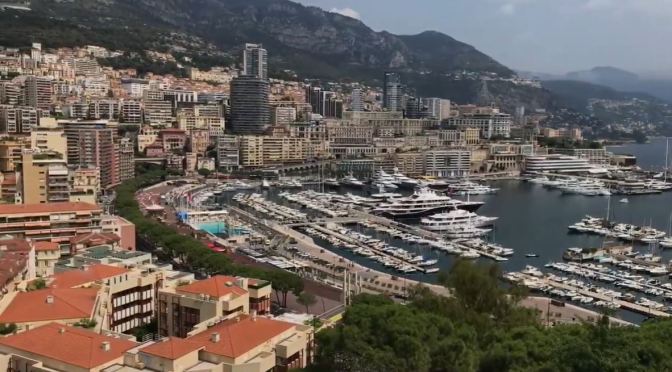
Monaco, French Principauté de Monaco, sovereign principality located along the Mediterranean Sea in the midst of the resort area of the Côte d’Azur (French Riviera). The city of Nice, France, lies 9 miles (15 km) to the west, the Italian border 5 miles (8 km) to the east. Monaco’s tiny territory occupies a set of densely clustered hills and a headland that looks southward over the Mediterranean. Many unusual features, however, have made Monaco among the most luxurious tourist resorts in the world and have given it a fame far exceeding its size.
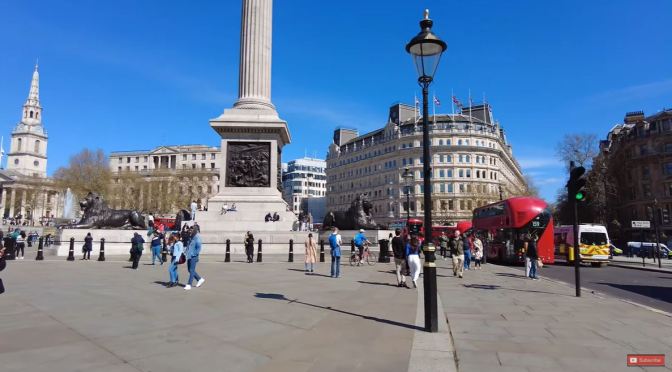
The West End of London (commonly referred to as the West End) is a district of Central London, west of the City of London and north of the River Thames, in which many of the city’s major tourist attractions, shops, businesses, government buildings and entertainment venues, including West End theatres, are concentrated.
The term was first used in the early 19th century to describe fashionable areas to the west of Charing Cross.[1] The West End covers parts of the boroughs of Westminster and Camden.[2]
Merseburg, city, Saxony-AnhaltLand (state), eastern Germany. It lies on the left bank of the Saale River, just south of Halle. Founded about 800 as a frontier fortress against the Slavs, it was a favourite residence of the German kings Henry I the Fowler (d. 936), Otto I, and Henry II.
It was the seat of a bishop from 968 until the Reformation (1561) and was chartered in 1188. It passed to Saxony in 1561 and was captured (1631) by the Swedes in the Thirty Years’ War. The residence of the dukes of Saxe-Merseburg from 1656 to 1738, it passed to Prussia in 1815. It was heavily bombed in World War II.
Merseburg’s most notable buildings are the imposing castle (1480–89) and the cathedral, begun in 1015 and dating mainly from the 13th and 16th centuries. Today there is a technical university (now part of Martin Luther University of Halle-Wittenberg) in Merseburg. The city’s industries include aluminum foil production.
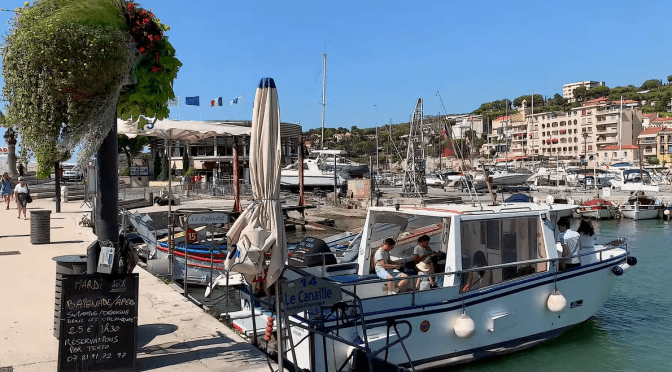
Cassis is a Mediterranean fishing port in southern France. Overlooked by a centuries-old château, it’s known for pebbly beaches and its calanques, narrow inlets framed by steep, limestone cliffs. The harbor features pastel-colored buildings, sidewalk cafes and restaurants. Local vineyards are known for producing Cassis white wine. Trails run along the huge, rocky Cap Canaille headland for panoramic sea views.
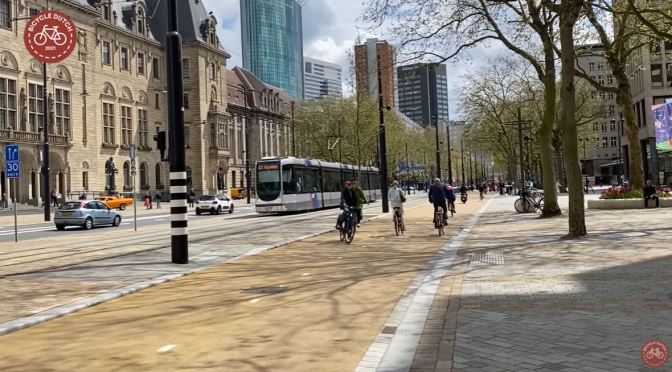
Rotterdam is a major port city in the Dutch province of South Holland. The Maritime Museum’s vintage ships and exhibits trace the city’s seafaring history. The 17th-century Delfshaven neighborhood is home to canalside shopping and Pilgrim Fathers Church, where pilgrims worshiped before sailing to America. After being almost completely reconstructed following WWII, the city is now known for bold, modern architecture.
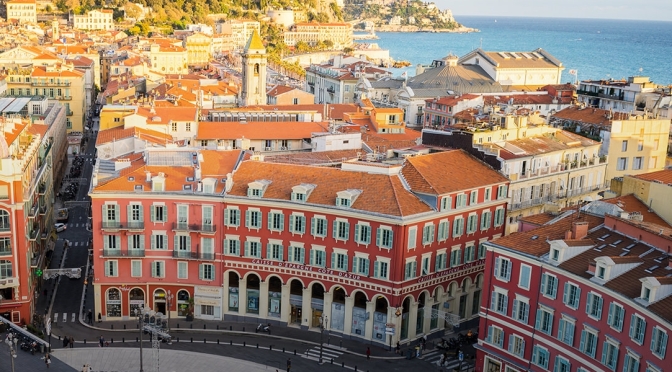
Nice Old Town is a characterful district in the south of the city. It forms a triangle, hemmed in by the port to the east and Castle Hill to the west, where the Promenade des Anglais runs out. The glittering water of the Mediterranean lines its southern edge. To the north is the Promenade du Paillon. Once, this was a river, but a series of floods led successive city governments to order that it should be covered up. Today, it’s a beautiful park.
Tightly packed tenements line the narrow streets. Their ground floors are full of shops, restaurants, bars, museums and galleries. Above are residential apartments adorned with wrought iron balconies and brightly painted wooden shutters. You could argue that those living in the Vieille Ville, as it’s known, boast the best address in Nice. With neighbourhoods as charming as this, it certainly isn’t hard to see why many refer to the city as Nice La Belle (Nissa La Bella according to the local Niçois) – ‘Nice the Beautiful’.
News, Views and Reviews For The Intellectually Curious



 Boomers Daily