Tag Archives: The New York Times Magazine

THE NEW YORK TIMES MAGAZINE- MARCH 15, 2026

Current cover

THE NEW YORK TIMES MAGAZINE: The 3.15.26 Issue features Yudhijit Bhattacharjee on the quest to save Bili the baby gorilla; Daphne Merkin on the psychoanalyst Stephen Grosz; Elisabeth Zerofsky on the key to Europe’s defense; and more.

The Quest to Save One Baby Gorilla From an Uncertain Fate

Social media is fueling a black market for infant primates like Bili, who was captured in the wild and trafficked. By Yudhijit BhattacharjeeCreditIllustration by Clément Thoby

The Race to Stop Wildlife Trafficking in Africa

In Nigeria, customs officers and conservationists are confronting the grim impacts of the $20 billion trade. By Arlette Bashizi and Yudhijit Bhattacharjee

X’s Chatbot Started Undressing Women. Was This What A.I. Wanted All Along?

Grok Imagine’s “nudify” scandal reveals something about the dream of manhandling photos.

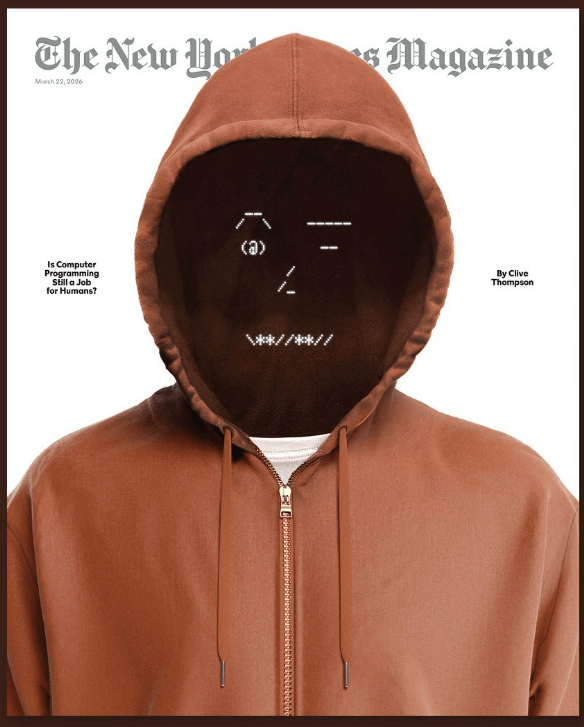
Coding After Coders: The End of Computer Programming as We Know It

In the era of A.I. agents, many Silicon Valley programmers are now barely programming. Instead, what they’re doing is deeply, deeply weird.

When a President Gets Addicted to Regime Change

Venezuela gave Trump a taste of success. This isn’t the first time an American president has gotten hooked on overthrowing foreign governments. By Scott Anderson

THE NEW YORK TIMES MAGAZINE- MARCH 8, 2026

Current cover

THE NEW YORK TIMES MAGAZINE: The 3.8.26 Issue features Matthieu Aikins and Wesley Morgan on the former Zero Unit soldiers who are now living in the U.S.; Sophie Haigney on love addiction; Robert Draper on his experience taking ibogaine; and more.

They Fought for the C.I.A. in Afghanistan. In America, They’re Living in Fear.

A shooting in Washington, D.C., threw their immigration status into jeopardy — and brought attention to a long-hidden dimension of America’s war.

Renters Made Mamdani Mayor. Can He Remake the City for Them?

His call to ‘freeze the rent’ galvanized the 69 percent of New Yorkers who don’t own their homes. But the city’s landlords claim the math doesn’t add up. By Jonathan Mahler

In a World Order Defined by Trump, the Key to Europe’s Defense Is Germany

In the wake of the U.S. bombing of Iran and its dismissal of European allies, an anxious continent’s best chance at security runs through its largest economy. By Elisabeth Zerofsky

Maggie Gyllenhaal on Envy, Rage and Reaching Out to Her Brother

With a big budget and a lot to say, the filmmaker is unleashing her inner monster with “The Bride!” By Lulu Garcia-Navarro

THE NEW YORK TIMES MAGAZINE- MARCH 1, 2026

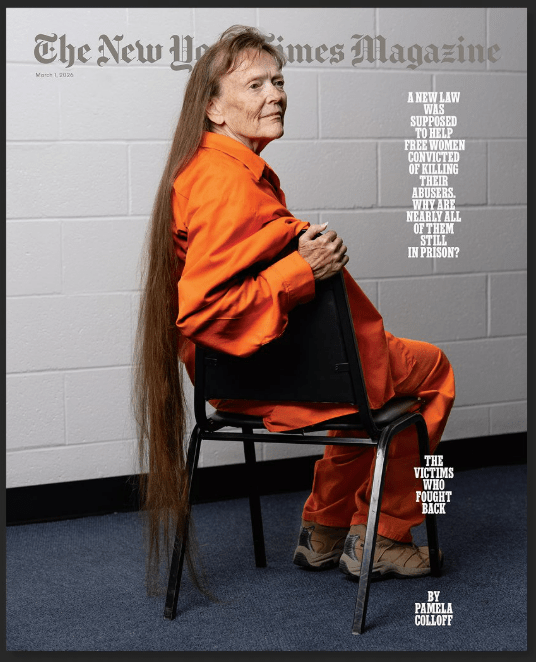
THE NEW YORK TIMES MAGAZINE: The latest issue features ‘The Victims Who Fought Back’ – A new law was supposed to help free women convicted of killing their abusers. Why are nearly all of them still in prison?

They Killed Their Abusers. Should They Spend Their Lives in Prison?

A new law was supposed to help reduce the sentences of survivors of domestic violence. Most are still behind bars.

They Fought for the C.I.A. in Afghanistan. In America, They’re Living in Fear.

A shooting in Washington, D.C., threw their immigration status into jeopardy — and brought attention to a long-hidden dimension of America’s war.

The Interview – Maggie Gyllenhaal Thinks Hollywood Likes Women to Direct ‘Little Movies’

THE NEW YORK TIMES MAGAZINE- FEB. 22, 2026

Current cover

THE NEW YORK TIMES MAGAZINE: The 2.22.26 Issue features Lulu Garcia-Navarro interviews Gisèle Pelicot; Caitlin L. Chandler on Europe’s harsh new immigration policy; Reid Forgrave on the olympic cross-country skier Jesse Diggins; and more.

Toni Morrison Was a Master of the Unthinkable

What made her one of our greatest — and most dangerous — novelists was her belief that stories could contain what our minds couldn’t confront.

“I Had No Idea How to Handle That”: The Drama Behind a Tense Ice Skating Moment

In 1994, the Olympics were rocked by a giant skating scandal. When it was all over, three athletes waited for their medals. Interviews by Charley Locke

Is Love Addictive? Many Say Yes, and It’s Changing Our Idea of Romance.

Poems and songs say love should be world-shattering. The logic of love addiction suggests that it shouldn’t. By Sophie Haigney

How Intense Should Love Really Be? We Want to Hear Your Thoughts.

Have you ever been called a “love addict?” Ever suspected somebody else was?

THE NEW YORK TIMES MAGAZINE- FEB. 15, 2026

Current cover

THE NEW YORK TIMES MAGAZINE: The 2.15.26 Issue features Maggie Jones of dissociative identity disorder; Alexandra Kleeman on Letterboxd; Ruth Margalit on Yair Golan; and more.

What It’s Like to Live With One of Psychiatry’s Most Misunderstood Diagnoses

Spurred by her past struggles with dissociative identity disorder, she has devoted her professional life to studying it.

Why the Future of the Movies Lives on Letterboxd

The entertainment industry is in crisis, but a social platform for film enthusiasts is thriving. Is it changing the way we watch? By Alexandra Kleeman

‘We Are Going to Live With Scars’: Yair Golan’s Battle for a Two-State Solution

To many Israelis, he’s a war hero. To others, he’s a traitor guilty of “blood libel.” Can Yair Golan change politics in Israel? By Ruth Margalit

Michael Pollan Says Humanity Is About to Undergo a Revolutionary Change

The best-selling author grapples with big questions about A.I., consciousness and the distractions polluting our minds. By David Marchese

THE NEW YORK TIMES MAGAZINE- FEBRUARY 8, 2026

Current cover

THE NEW YORK TIMES MAGAZINE: The 2.8.26 Issue features Charles Homans on Minneapolis under siege; Dan Kaufman on Trump’s war on federal workers; Hugo Lindgren on the intersection of Wall Street strategies and golf; and more.

Watching America Unravel in Minneapolis

What I saw, as federal agents stormed the city and residents banded together to protect themselves, was a dark, dystopian future becoming reality. By Charles Homans and Philip Montgomery

‘The Biggest Act of Union-Busting in U.S. History’: Trump’s War on Federal Workers

With 300,000 employees gone and collective-bargaining rights eliminated, the administration has hobbled organized labor. Did it also start a movement? By Dan Kaufman

Rev. James Martin on Our Moral Duty in Turbulent Times

The author and Jesuit priest discusses human dignity, political divides and how he sees the role of the Catholic Church. By Lulu Garcia-Navarro

THE NEW YORK TIMES MAGAZINE- FEBRUARY 1, 2026

In this issue, Emily Bazelon and Rachel Poser on what's going on inside the F.B.I.; Taffy Brodesser-Akner on "Operation Mincemeat"; Michael Steinberger on the human rights lawyer Philippe Sands; and more.

THE NEW YORK TIMES MAGAZINE: The 2.1.26 Issue features Emily Bazelon and Rachel Poser on what’s going on inside the F.B.I.; Taffy Brodesser-Akner on “Operation Mincemeat”; Michael Steinberger on the human rights lawyer Philippe Sands; and more.

What It’s Like to Live With One of Psychiatry’s Most Misunderstood Diagnoses

Spurred by her past struggles with dissociative identity disorder, she has devoted her professional life to studying it.

Inside Kash Patel’s F.B.I.: Meltdowns, Chaos, Vendettas

In Minnesota, America’s Federal System Is Coming Apart

The state is in a standoff with the federal government over who has the power to investigate the killing of protesters. It’s not a fair fight. By Emily Bazelon

‘The Biggest Act of Union-Busting in U.S. History’: Trump’s War on Federal Workers

With 300,000 employees gone and collective-bargaining rights eliminated, the administration has hobbled organized labor. Did it also start a movement? By Dan Kaufman

THE NEW YORK TIMES MAGAZINE- January 25, 2026

Current cover

THE NEW YORK TIMES MAGAZINE: The 1.25.26 Issue features C.J. Chivers on semiautonomous killer A.I. drones in Ukraine; Jim Rutenberg on the MAGA plan to take over TV; Taffy Brodesser-Akner on seeing the musical “Operation Mincemeat” 13 times; and more.

What Keeps Max Greyserman in Golf Obscurity? Less Than One Stroke Per Round.

He is ranked No. 33 in the world. Can he rise to the top by using lessons from his father’s time on Wall Street?

Inside Kash Patel’s F.B.I.: Meltdowns, Chaos, Vendettas

Forty-five current and former employees on the changes they say are undermining the agency and making America less safe. By Emily Bazelon and Rachel Poser

Takeaways From The Times’s Inside Look at the F.B.I.

Many current and former employees say Kash Patel’s first year as F.B.I. director was marred by vendettas, mismanagement and meltdowns. By Emily Bazelon and Rachel Poser

THE NEW YORK TIMES MAGAZINE- January 18, 2026

Current cover

THE NEW YORK TIMES MAGAZINE: The 1.18.26 Issue features Robert Draper on Marjorie Taylor Greene; Ferris Jabr on a science experiment to help make the oceans less acidic; Jonathan Mahler on Christian Zionism and MAGA; and more.

Kílian Jornet on What We Can Learn From Pushing Our Bodies to Extremes

Imagine yourself on an isolated mountain pass. The wind is whipping, the air is thin, there is nothing around you except the sky and the sound of your feet hitting the craggy ground. Many of us have experienced the wonder and exertion that comes with a great hike in a wild landscape. These are places we may love to visit, but for Kílian Jornet, this is where he is most at home.

The MAGA Plan to Take Over TV Is Just Beginning

Under Trump, the F.C.C. has used obscure regulatory powers to crack down on network TV. Some conservatives are pushing back. By Jim Rutenberg

Trump’s Fight With Minnesota Is About More Than Immigration

The state embodies a civic ideal that the administration in Washington wants to discredit. By Charles Homans

THE NEW YORK TIMES MAGAZINE- January 11, 2026

Current cover

THE NEW YORK TIMES MAGAZINE: The 1.11.26 Issue features Sam Anderson on “The Pitt”; Matthew Shaer on bullying; Pahrul Sehgal on the “masculinity crisis”; and more.

On ‘The Pitt,’ E.R. Doctors Try to Fix This Broken World

Noah Wyle and his castmates turned one harrowing day at an E.R. into an unforgettable season of television. Can they do it again?

The ‘Masculinity Crisis’ Is Real. This Forgotten Book Explains Why.

Why do men find it so hard to connect with other people, and their own emotions? By Parul Sehgal

Could Viral Protest Videos Create a Backlash Against ‘Less Lethal’ Weapons?

They were developed during the civil rights movement to reduce harm, but their rampant use during anti-ICE protests has led to a new kind of violence. By Clayton Dalton

He Tried to Protect His Son From Bullies. He Didn’t Know How Far They Would Go.

After his son was repeatedly attacked, Rick Kuehner reached out to his suburban school, to the police and to other parents. The violence only got worse. By Matthew Shaer