
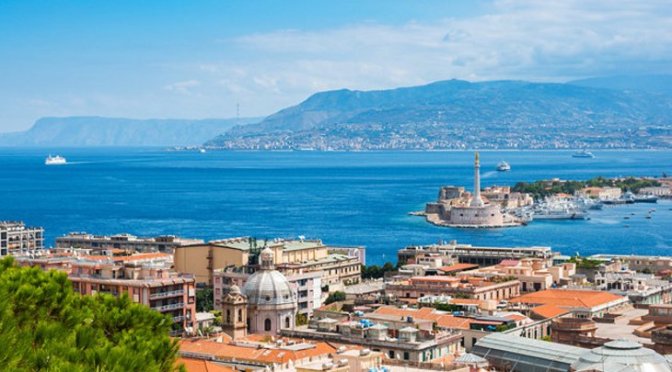
Sicily, the largest Mediterranean island, is just off the “toe” of Italy’s “boot.” Its rich history is reflected in sites like the Valley of the Temples, the well-preserved ruins of 7 monumental, Doric-style Greek temples, and in the Byzantine mosaics at the Cappella Palatina, a former royal chapel in capital city Palermo. On Sicily’s eastern edge is Mount Etna, one of Europe’s highest active volcanoes.
Tag Archives: Syracuse

Walks: ‘Ortigia Island, Syracuse In Sicily’ (Video)
Ortygia is a small island which is the historical centre of the city of Syracuse, Sicily. The island, also known as the Città Vecchia, contains many historical landmarks. The name originates from the ancient Greek ortyx, which means “Quail”.
Video timeline: 0:00 Drone intro and Map 1:59 Walk begins at Ponte Umbertino 3:41 Archimedes Statue 6:59 Temple of Apollo 8:26 Outdoor Market 15:42 Temple of Apollo 18:24 Via Cavour 22:58 Piazza Duomo 23:43 Cathedral of Syracuse 31:24 Piazza Minerva 33:21 Via Roma 34:56 Piazza Archimede 36:53 Fish House Art Gallery 41:06 Porta Marina 42:07 Foro Vittorio Emanuele II 48:43 Giardino Aretusa 50:54 Lungomare and Arethusa Spring 57:30 Ortigia Promenade 1:07:35 Forte Vigliena 1:15:40 Jewish Quarter 1:20:24 Piazza Minerva 1:24:58 Largo Aretusa 1:26:59 Lungomare and Arethusa Spring
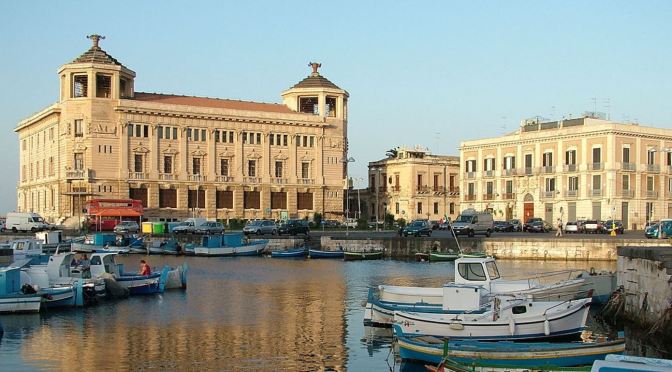
Top Travel Destinations: Ortigia Island, Historical Center Of Syracuse, Sicily
From a New York Times online article:
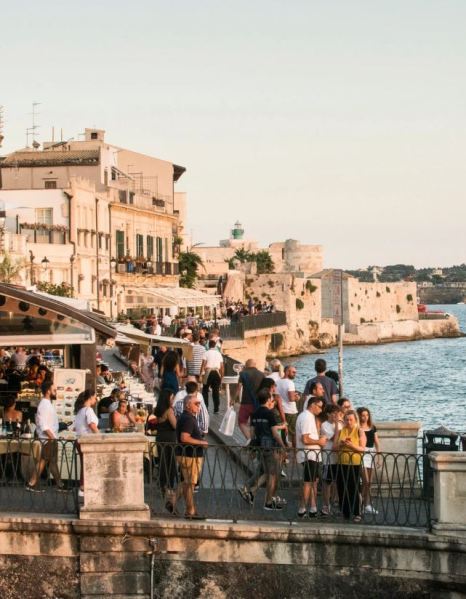 A passeggiata, or evening walk, around the perimeter of Ortigia reveals many notable structures and stories. Start from the Parco Letterario Elio Vittorini, on the eastern side, and head clockwise. As waves crash against the rocks below the sea wall, you’ll pass crenelated lookout points and the chiseled facade of the 17th-century Chiesa dello Spirito Santo, before finding yourself in the palm-planted gardens of the 13th-century Castello Maniace.
Founded by Greeks around 734 B.C.,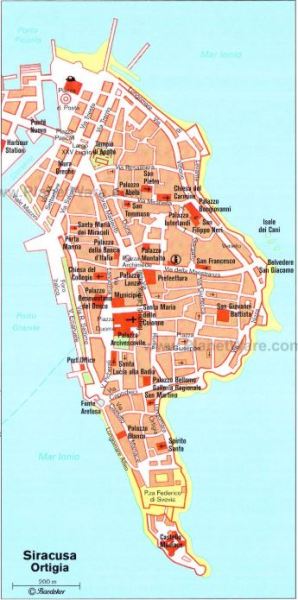 Ithe southeastern Sicilian city that Cicero called “the greatest and most beautiful of all Grecian cities” achieved a size and status in the ancient world that made it a rival of major powers like Athens and Carthage. Takeovers and makeovers by Romans, Byzantines, North Africans, Normans and others left their marks as well, influencing everything from religious art to the region’s distinctive savory-sweet-sour cooking style. Much of the ancient city has crumbled since Cicero’s day, though the ruins can still be explored in Syracuse’s celebrated archaeological park and museum. But the main attraction today is the historical center of Syracuse: Ortigia island, a maze of narrow streets, ornate Baroque churches and centuries-old palazzi.
To read more: https://www.nytimes.com/2019/09/05/travel/what-to-do-36-hours-in-syracuse-sicily.html
 Boomers Daily