

From a Hyperallergic.com online review:
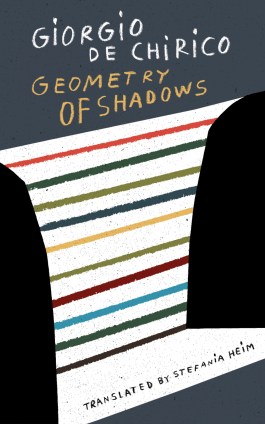 “Everywhere is the wait and the gathering,” concludes “Resort.” A kind of soporific haze has seeped into de Chirico’s imagination, asserted through evocations of sleeping and dreaming. Even the violence and ambiguous sexual imagery of “The Mysterious Night” yield to a final note of definitive somnolence: “Everything sleeps; even the owls and the bats who also in the dream dream of sleeping.”
“My room,” he writes, “is a beautiful vessel,” and from there he propels his imagination outward across space and time, geography and history. Indeed, “faraway” (lontani, lontano) is one of his favorite adjectives.  He daydreams of Mexico or Alaska and invokes a future-oriented “avant-city” and a distant day where he is immortalized, albeit in an old-fashioned mode as a “man of marble.”
The paintings of Giorgio de Chirico invariably call to mind a cluster of adjectives: haunting, enigmatic, evocative, poetic. But unlike many artists whose poetry remains wordless and confined to the canvas, de Chirico was also a writer whose texts have been praised and even translated by such art-world luminaries as Louise Bourgeois and John Ashbery. A new collection provides us with more of de Chirico’s writings. Translated into English by Stefania Heim, Geometry of Shadows presents the relatively compact totality of the artist’s extant poems and poetic fragments written in Italian, complementing his memoirs and the novel Hebdomeros (in French), which have been available in English for some time.
To read more: https://hyperallergic.com/520898/geometry-of-shadows-by-giorgio-de-chirico/
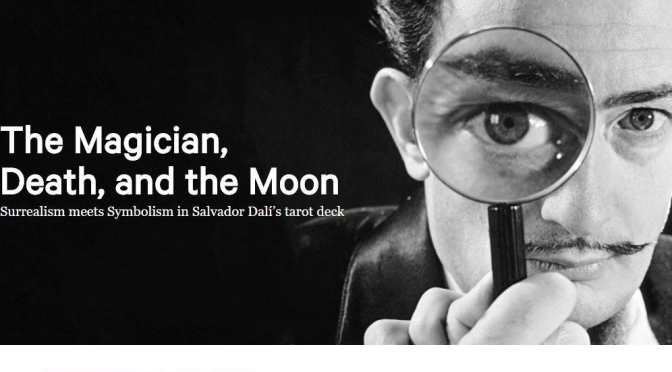
 Dalí poses as the Magician, his wife Gala becomes the Empress, and the death of Julius Caesar is reinterpreted as the Ten of Swords in the artist’s extraordinary custom tarot deck. First published in a 1984 limited edition that has since long sold out, this lush box set brings back all 78 cards, each dazzling in color, along with a companion book on the making-of and practical instructions.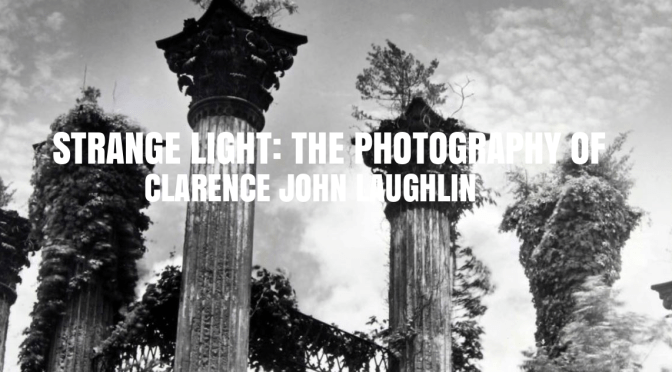
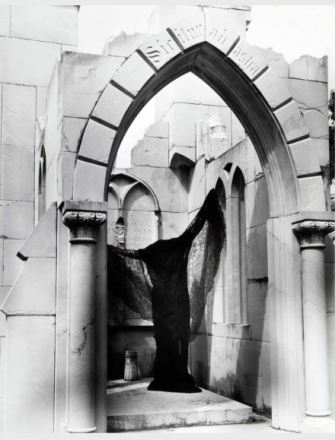 Dubbed “The Father of American Surrealism,” Clarence John Laughlin (American, 1905-1985) was the most important Southern photographer of his time and a singular figure within the burgeoning American school of photography. Known primarily for his atmospheric depictions of decaying antebellum architecture that proliferated his hometown of New Orleans, Laughlin approached photography with a romantic, experimental eye that diverged heavily from his peers who championed realism and social documentary.
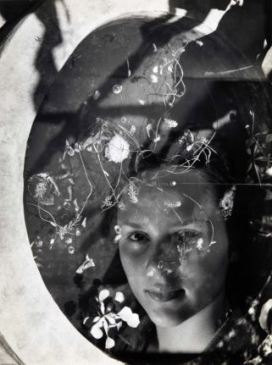 The exhibition surveys Laughlin’s signature bodies of work made between 1935 and 1965, emphasizing his inventiveness, artistic influences, and deep connection to the written word. The High began collecting Laughlin’s work in 1974 and Strange Light: The Photography of Clarence John Laughlin is the first major presentation of Laughlin’s photographs by the High Museum following a landmark acquisition of his work in 2015.
 Boomers Daily