Tag Archives: Seeker Elements

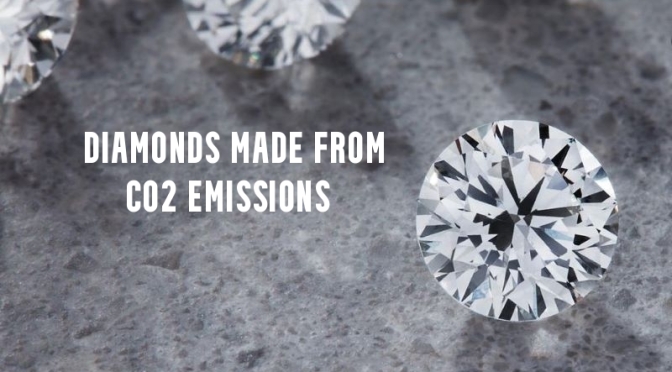
Innovation: Diamonds Made From CO2 Emissions

A UK company named Skydiamond hopes to revolutionize the traditional diamond mining industry by using carbon capture technology to do just that. The company calls it a ‘zero-impact diamond’ because the process pulls carbon dioxide right out of the air.

Although, a diamond traps only a modest amount of carbon — one carat contains just 200 milligrams. Pure carbon can take many forms — it all depends on how the atoms are arranged. Graphite is arranged into multiple layers, graphene in a single layer, and if it’s rolled-up, it forms carbon nanotubes. But when each carbon forms 4 strong bonds in a tetrahedral structure, it becomes a diamond.

Most natural diamonds were formed over a billion years ago, more than 120 kilometers beneath the Earth’s surface. This is where intense temperature and pressure cause carbon atoms to strongly bond together and arrange into crystal structures. Volcanic eruptions bring these crystals embedded in magma to the surface. When the magma cools, it hardens in long vertical shafts called kimberlite pipes. And these pipes are what’s sought after in the mining industry.
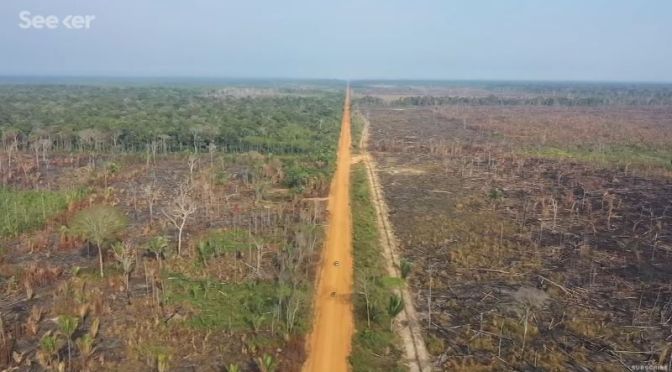
Deforestation: ‘Amazon Rainforest’ – Becoming A Savannah In 15 Yrs? (Video)

New research suggests that if the current rate of deforestation continues, the Amazon rainforest could transform into a savannah within 15 years. Do we have time to stop it?

The Amazon basin spans over 6 million square kilometers, and is home to one-fifth of the world’s land species. In addition, it supports the 30 million people who live and depend on the land as a source of food, medicine, and shelter. That’s not even including the key role it plays in regulating the regional AND global climate.

Trees absorb water through their roots and transport it to their leaves, where it’s released as vapor through small pores in a process called transpiration. As the water vapor rises and condenses, it forms rain clouds over the forest canopy. Basically, the rainforest is making its own weather. For example, one large tree can release 1,000 liters of water into the atmosphere in a single day.

The rainforest recycles this water up to six times before it moves out of the region, but as more trees are cut down, those that remain may not be able to recycle enough water to survive. Less trees means more sunlight will hit the forest floor, exposing the forest to higher temperatures. Since deforestation began accelerating in the 1970’s, 800,000 square kilometers of the Amazon have been lost. And over that same period, the average temperature of the basin has risen by 1 degree Celsius.