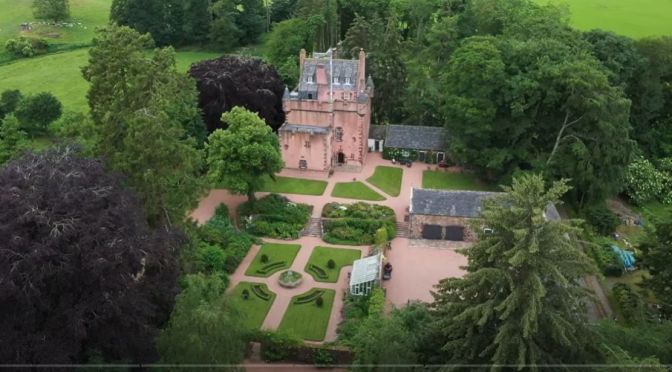
Wall Street Journal (July 18, 2023) – The Towie Barclay Castle in Aberdeenshire, Scotland, once visited by the late Queen Mother, has all the features of a traditional castle like shot holes, gun loops and stone walls.
Video timeline:0:00 Towie Barclay 1:32 Entry, kitchen and dining 2:48 The Great Hall 3:56 The library 4:54 The garden 6:39 Maintaining the castle
The 2.7-acre castle grounds, also includes a walled garden, gardener’s cottage and carriage rooms. But it’s also a family home that was purchased by a husband and wife for £4,000 in 1972. Homeowner Karen Ellington opens up the castle doors to share the restoration journey from ruin to refuge.
John Carroll (December 2022) – East Kilbride is the largest town in South Lanarkshire in Scotland and the country’s sixth-largest locality by population. It was also designated Scotland’s first new town on 6 May 1947.
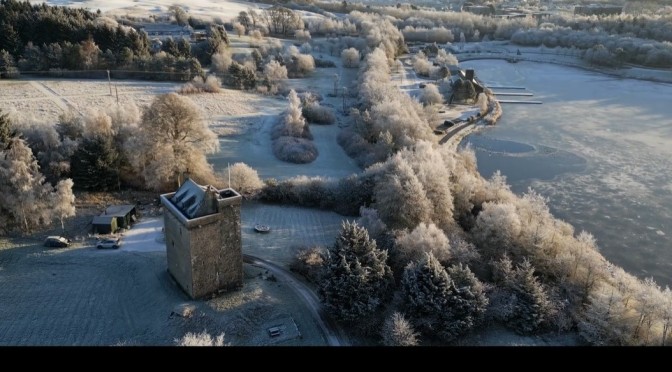
Mains Castle lies just to the north of East Kilbride, and is easily visible from the public path around the loch of the James Hamilton Heritage Park. It is a free-standing rectangular tower house on a mound, with a square caphouse providing access to the wallwalk in one corner of the tower. Historically there were additional buildings clustered around the tower, but there are no traces of these now. Mains Castle is privately owned and is occupied.
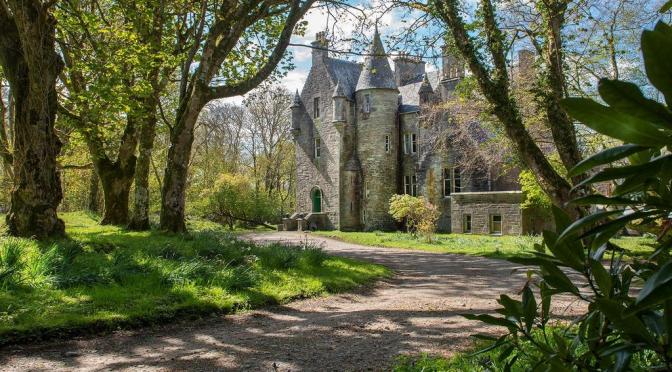
Kilberry Castle is the epitome of historic Scottish Baronial Tower Houses— built in the 15th century, it has undergone everything from a pirate attack, being besieged during the 1643-1645 civil war, to almost being destroyed by a fire.
In 1550, the Campbell family acquired the Kilberry lands and the castle has, quite amazingly, stayed in the same family ever since.
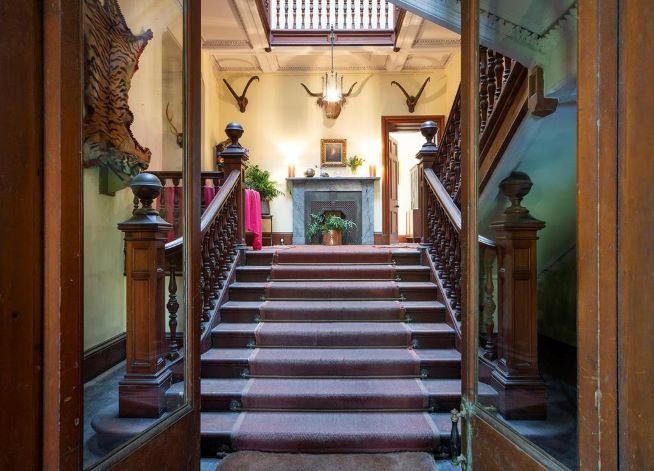
Today, the property is a gateway for stepping back in time. Yes, there are original open fireplaces, decorative cornicing and galleried landings, but in one of the 10 bedrooms is a museum-like shrine to the era.
This is – Scotland cinematic travel video, tourism documentary film, drone 4k. Top 6 Scottish Castles.
Scotland’s turbulent history made its lairds and kings alike seek safety in the stone walls of impregnable fortresses. Today, its castles are one of its top attractions; more than five hundred remain, though it’s estimated there may originally have been more than 2,000. They vary in character from ruins in the rocky wilderness, to well-appointed stately homes, and from extensive royal palaces to small tower houses.
Edinburgh Castle benefits from a magnificent situation, atop an extinct volcano overlooking the Scottish lowlands and the Firth of Forth. Its attractions include the delightful St Margaret’s Chapel, Edinburgh’s oldest building, as well as the Honours of Scotland (the Scottish crown jewels), and the famous ancient siege gun Mons Meg. If you visit, make sure you’re there for the firing of the one o’clock gun, intended as a time signal for ships in the firth.
Stirling Castle was the chief residence of the Stewart kings. It was defensive, on a hill surrounded by steep cliffs on three sides, but under James IV and James V, it became a Renaissance palace borrowing influences from France and Germany, as well as England. The royal apartments have been recently restored to their original splendor, with fine tapestries and painted ceilings.
Tantallon is very different from either of the royal castles; it’s a semi-ruined fourteenth-century building, on a headland with dramatic plunging sea cliffs. It’s only thirty miles or so from Edinburgh, but it’s a completely different world, particularly when the weather is stormy.
Drumlanrig shows the genteel type of Scottish castle to perfection. Its gentle pink sandstone and Renaissance style give it an elegance few other castles can match, and its interiors are equally splendid. It’s still home to the Duke of Buccleuch and Queensberry, whose art collection includes works by Rembrandt and Leonardo; fortunately, the Duke opens the castle to the public on a regular basis.
Dunrobin is a French style turreted castle and quite a recent building as castles go; it was designed by Sir Charles Barry, the Victorian architect better known for his work on the Houses of Parliament in London. The interior is luxurious, and the extensive gardens are planned on the French style, with parterres set around circular pools and fountains.
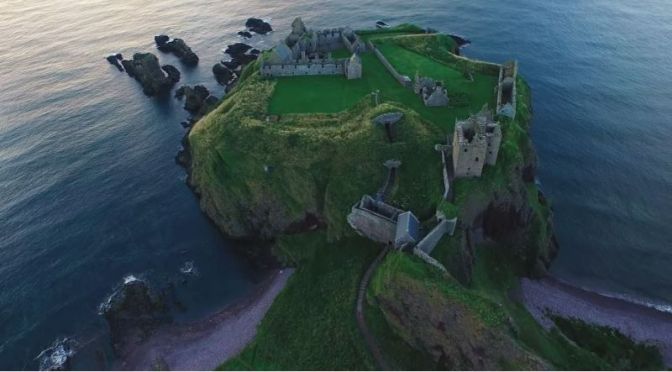
Dunnottar, near Stonehaven, is one of Scotland’s wildest castles. The ruined castle walls surmount a grass-covered rock in the North Sea, linked to the coast only by a thin strip of land. It’s an adventure even getting there.
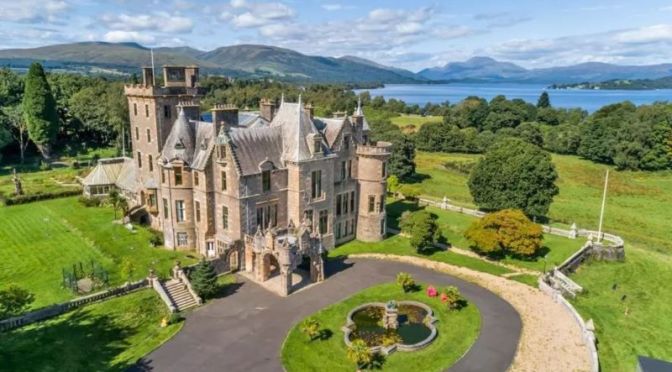
Auchendennan House is an impressive A-listed Baronial castle featuring two turrets, set centrally amidst its 55 acres of beautifully designed landscape of parkland and woods. Located close to the southwest bank of Loch Lomond, it enjoys remarkable views across the loch to the mountains of the national park beyond.
The four-storey sandstone castle is approached from the main road, along a private tarmac drive with speed bumps, lined with trees. Through secure gates fitted with a telephone entry system, the driveway incorporates a carriage turning circle, with an attractive water fountain carved with dolphins and shells.
On arrival, shelter is provided by a striking Porte Cochere with arched coach openings, turrets and a vast array of decorative details.
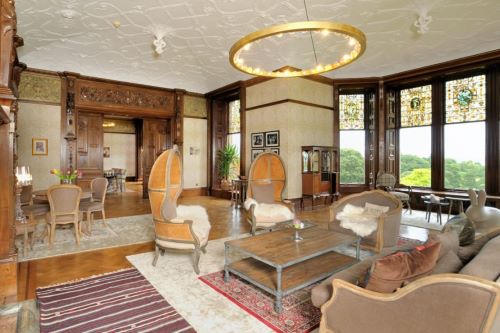
Entered on basement level, you are welcomed into a grand 20th century vestibule, with oak panelling and a large carved fireplace including cherub and female figurines and inscriptions. Hidden in the panelling one secret door leads to a WC, whilst another leads to an office, various storage rooms, and a two-bedroom staff apartment with bathroom, kitchen and living area. Also on this level is a large reception room with its own garden entrance, currently used as a gym.






 Boomers Daily