
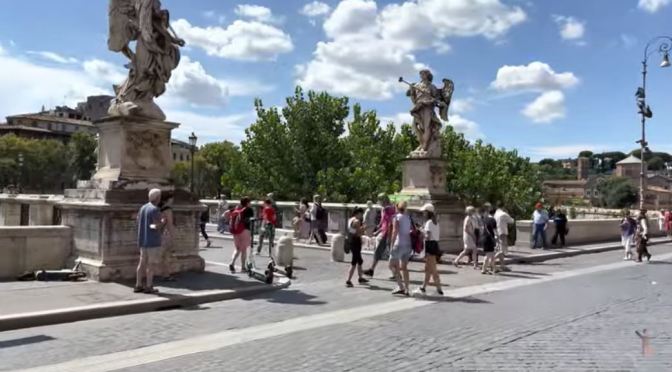
Rome, Italian Roma, historic city and capital of Roma provincia province), of Lazio regione (region), and of the country of Italy. Rome is located in the central portion of the Italian peninsula, on the Tiber River about 15 miles (24 km) inland from the Tyrrhenian Sea. Once the capital of an ancient republic and empire whose armies and polity defined the Western world in antiquity and left seemingly indelible imprints thereafter, the spiritual and physical seat of the Roman Catholic Church, and the site of major pinnacles of artistic and intellectual achievement, Rome is the Eternal City, remaining today a political capital, a religious centre, and a memorial to the creative imagination of the past.
Tag Archives: Roman Colosseum
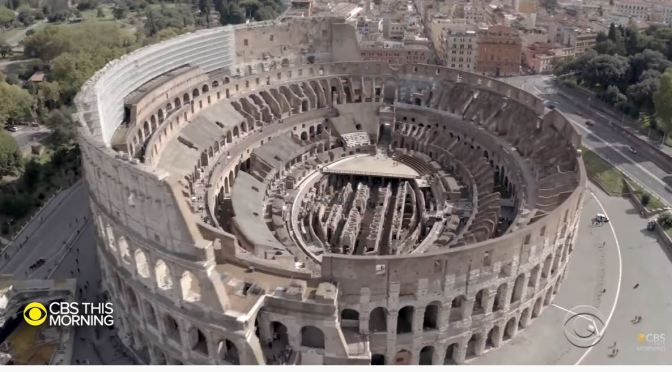
Views: Colosseum In Rome Opens Up Substructure
Visitors will be able to walk in the footsteps of Roman Gladiators in the same areas where they prepared to fight to the death. The Colosseum is opening up its deepest depths to the public. Chris Livesay reports.
The Colosseum is an oval amphitheatre in the centre of the city of Rome, Italy, just east of the Roman Forum. It is the largest ancient amphitheatre ever built, and is still the largest standing amphitheatre in the world today, despite its age.
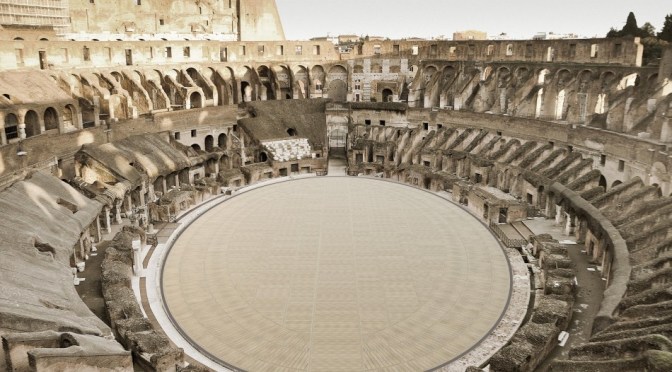
Design: Italy Approves New Retractable Arena Floor For Colosseum In Rome
The Italian government has approved plans designed by engineering firm Milan Ingegneria to create a remote-controlled, retractable floor within the Colosseum amphitheatre in Rome.
The design competition for the new Colosseum arena floor, launched at the end of 2020, originated in 2014 with an idea by the archaeologist Daniele Manacorda and was included in the Strategic Plan for Great Cultural Projects in 2015.
The design envisages bringing to life the integral components of the largest amphitheater in the ancient world which is estimated to have held up to 87.000 spectators. The indoor arena measures 86 × 54 m with an area of 3.357 sqm. The new platform is to be placed at the height it had at the time of the Flavians and takes up the layout of the original plan. The beams will rest on the existing walls, with no mechanical anchors or any invasive impact, and will be completely reversible. Having the new floor will allow us to fully understanding its original uses and functions, while the technological solutions will guide visitors in discovering the complex organizational and scenic machine that governed the shows in Roman times.
Read more on Dezeen: https://www.dezeen.com/?p=1644269
 Boomers Daily