
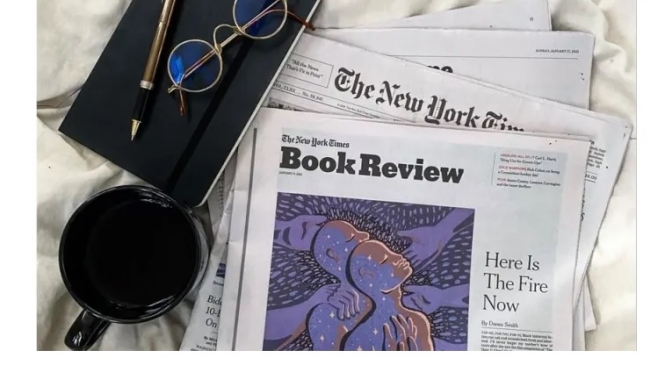

THE NEW YORK TIMES BOOK REVIEW (March 16, 2024):
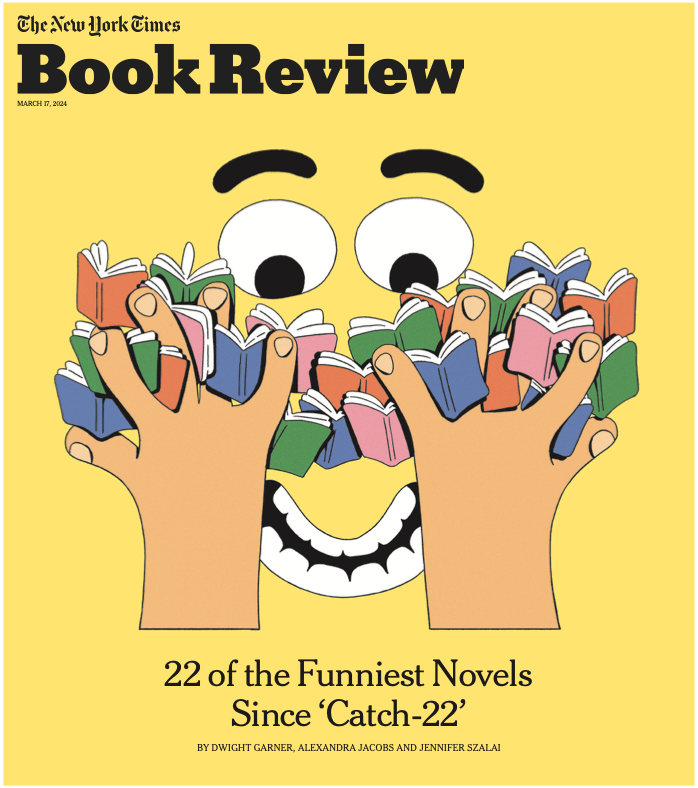
22 of the Funniest Novels Since ‘Catch-22’

Because we could all use a laugh.
By Dwight Garner, Alexandra Jacobs and Jennifer Szalai
When it comes to fiction, humor is serious business. If tragedy appeals to the emotions, wit appeals to the mind. “You have to know where the funny is,” the writer Sheila Heti says, “and if you know where the funny is, you know everything.” Humor is a bulwark against complacency and conformity, mediocrity and predictability.
With all this in mind, we’ve put together a list of 22 of the funniest novels written in English since Joseph Heller’s “Catch-22” (1961). That book presented a voice that was fresh, liberated, angry and also funny — about something American novels hadn’t been funny about before: war. Set during World War II and featuring Capt. John Yossarian, a B-25 bombardier, the novel presaged, in its black humor, its outraged intelligence, its blend of tragedy and farce, and its awareness of the corrupt values that got us into Vietnam, not just Bob Dylan but the counterculture writ large.
You’re Not Being Gaslit, Says a New Book. (Or Are You?)
“On Gaslighting,” by the philosophy professor Kate Abramson, explores the psychological phenomenon behind the hashtags.

ON GASLIGHTING, by Kate Abramson
Don’t be so sensitive.
You’re overreacting.
You’re imagining things.
These are things gaslighters say, writes Kate Abramson.
As she explains in “On Gaslighting,” the term originated in the 1944 film “Gaslight,” and after entering the therapeutic lexicon of the 1980s, steadily made its way into colloquial usage.
As a society we have become adept at classifying actions within interpersonal relationships using therapy-speak. From “attachment style” to “trauma-bonding,” personal judgments have become diagnoses — without the assistance of a licensed professional: Anyone with a social media account or a jokey T-shirt can get in on the action. (In 2021, the flippant phrase “gaslight, gatekeep, girlboss” became a popular, snide social-media shorthand for a certain kind of capitalist feminism.)













 Boomers Daily