Santa Croce is a laid-back, slightly off-the-beaten-track area with a local vibe. After school, kids play in Campo San Giacomo dall’Orio, and this square and nearby streets are home to casual eateries serving global cuisine. On the Grand Canal, the imposing Fondaco dei Turchi features exhibits on natural history while the nearby Ca’ Pesaro palace showcases contemporary art and Asian decorative arts.
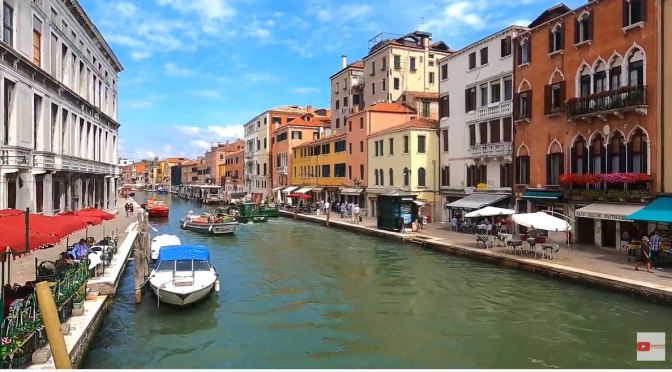
Lively Cannaregio is known for the 16th-century Jewish Ghetto. The Strada Nova is a popular local shopping thoroughfare, and the backstreets are a destination for crafts and vintage goods. Casual canalside restaurants and bars line nearby Fondamenta della Misericordia and Fondamenta dei Ormesini. The stately Ca’ d’Oro palace displays a Renaissance art collection.
Cannaregio is one of six neighbourhoods or Sestrieri that make up Venice, a great place to explore if you want to appreciate the true local life of the city. It is the second largest sestiere by land area and the largest by population.
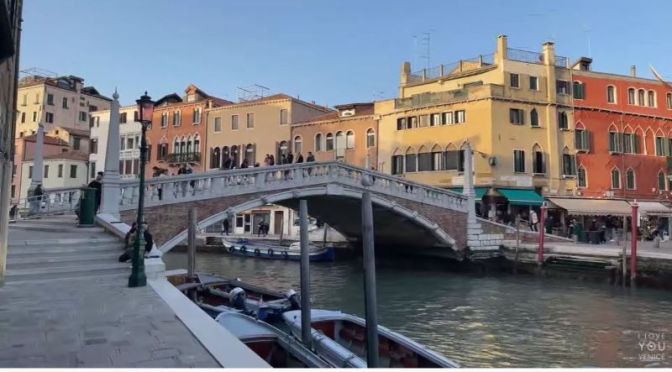
Video timeline: 00:00 Santa Lucia Train Station 01:10 Grand Canal and Church of San Simeon Piccolo 02:47 Ponte degli Scalzi 03:20 Rio Terà Lista di Spagna 04:50 Into a 05:30 Trash collectors on Grand Canal 08:10 Campo San Geremia 08:24 Church San Geremia and Lucia (Close) 09:55 Salizada S. Geremia 10:22 Ponte delle Guglie 12:50 Fondamenta Cannaregio 19:37 Ponte dei Tre Archi 22:47 Calle Cannaregio 25:18 Calle del Forner 25:50 Fondamenta delle Case Nuove 29:20 Fondamenta Carlo Coletti 36:45 Bridge to Venetian Ghetto 37:57 Campo de Ghetto Nuovo 38:46 The Jewish Museum of Venice 39:57 On memorial 44:00 Bridge over “Rio del Ghetto” 47:57 children’s skateboards in front of the nursery school
Lively Cannaregio is known for the 16th-century Jewish Ghetto. The Strada Nova is a popular local shopping thoroughfare, and the backstreets are a destination for crafts and vintage goods. Casual canalside restaurants and bars line nearby Fondamenta della Misericordia and Fondamenta dei Ormesini. The stately Ca’ d’Oro palace displays a Renaissance art collection.
The Venetian Ghetto was the area of Venice in which Jews were forced to live by the government of the Venetian Republic. The English word ghetto is derived from the Jewish ghetto in Venice. The Venetian Ghetto was instituted on 29 March 1516. It was not the first time that Jews in Venice were compelled to live in a segregated area of the city. In 1552 Venice had 160,000 inhabitants, including 900 Jews, who were mainly merchants.
News, Views and Reviews For The Intellectually Curious

 Boomers Daily