
From a Harvard Heart Health online article:
 For the study, nearly 8,300 people at risk for heart disease had fasting and nonfasting lipid profile tests done at least four weeks apart. (Fasting means they had nothing to eat or drink except water for at least eight hours before the test.) The differences in their total, LDL, and HDL cholesterol values were negligible. Triglyceride levels were modestly higher in the nonfasting samples.
Don’t want to skip breakfast before your cholesterol test? You probably don’t need to. A study published online May 28 by JAMA Internal Medicine adds to the evidence that fasting isn’t necessary before this common blood test, often referred to as a lipid profile.
To read more click on following link: https://www.health.harvard.edu/newsletter_article/farewell-to-fasting-before-a-cholesterol-test
 A blood test to detect the brain changes of early Alzheimer’s disease has moved one step closer to reality. Researchers from Washington University School of Medicine in St. Louis report that they can measure levels of the Alzheimer’s protein amyloid beta in the blood and use such levels to predict whether the protein has accumulated in the brain. The findings represent a key step toward a blood test to diagnose people on track to develop the devastating disease before symptoms arise.
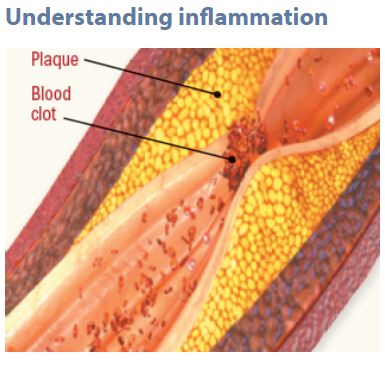 Chronic inflammation often begins with a similar cellular response but morphs into a lingering state that persists far longer. Toxins such as cigarette smoke or an excess of fat cells (especially around the belly area) can also trigger inflammation. So can the fatty plaque inside arteries, which causes inflammatory cells to cover and wall off the plaque from the flowing blood. But the plaque may rupture, mingle with blood, and form a clot. These clots are responsible for the majority of heart attacks and most strokes.
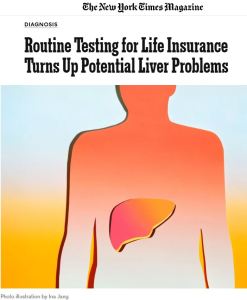 “The doctor asked whether he was sure that he had not taken anything else when he was sick? No acetaminophen? No herbs or supplements? The man was certain. Moreover, his labs were abnormal even before he took the antibiotics. The doctor hypothesized that the man’s liver had been a little inflamed from some minor injury — maybe a virus or other exposure — and the antibiotic, which is cleared through the liver, somehow added insult to injury.”
 Boomers Daily