
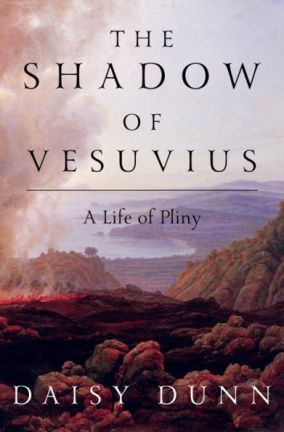
 When Pliny the Elder perished at Stabiae during the eruption of Vesuvius in 79 AD, he left behind an enormous compendium of knowledge, his thirty-seven-volume Natural History, and a teenaged nephew who revered him as a father. Grieving his loss, Pliny the Younger inherited the Elder’s notebooks—filled with pearls of wisdom—and his legacy. At its heart, The Shadow of Vesuvius is a literary biography of the younger man, who would grow up to become a lawyer, senator, poet, collector of villas, and chronicler of the Roman Empire from the dire days of terror under Emperor Domitian to the gentler times of Emperor Trajan. A biography that will appeal to lovers of Mary Beard books, it is also a moving narrative about the profound influence of a father figure on his adopted son. Interweaving the younger Pliny’s Letters with extracts from the Elder’s Natural History, Daisy Dunn paints a vivid, compellingly readable portrait of two of antiquity’s greatest minds.
Tag Archives: Biographies

Artist Profiles: Film Director Mike Nichols (1931-2014) Profiled In New Book (NY Times Podcast)
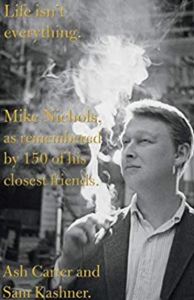 Mike Nichols, who died in 2014, was a film and stage director of genius, and he wasted no time in showing it. The first two films he directed were “Who’s Afraid of Virginia Woolf?” and “The Graduate.” In the new oral history “Life Isn’t Everything,” Ash Carter and Sam Kashner draw on 150 respondents to tell the story of his incredible career.

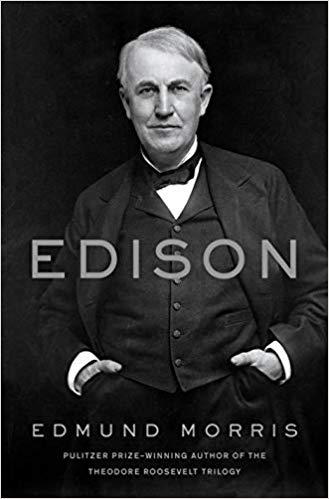
New Books: “Edison” By Pulitzer Prize-Winner Edmund Morris (2019)
From a Wall Street Journal online review:
 Not until July 16 did Edison feel that he had a device worth patenting. The application he signed that day specified multiple timpani that “reproduced” vocal inflections and a sibilant-sensitive diaphragm. But a laboratory visitor (spying for Bell) found the instrument more powerful than clear, with the word schism sounding more like kim.
“We have had terrible hard work on the Speaking telegraph,” Batchelor complained to his fellow inventor Ezra Gilliland. For the past five to six weeks, he added, Edison’s team had been “frequently working 2 nights together until we all had to knock off from want of sleep.”
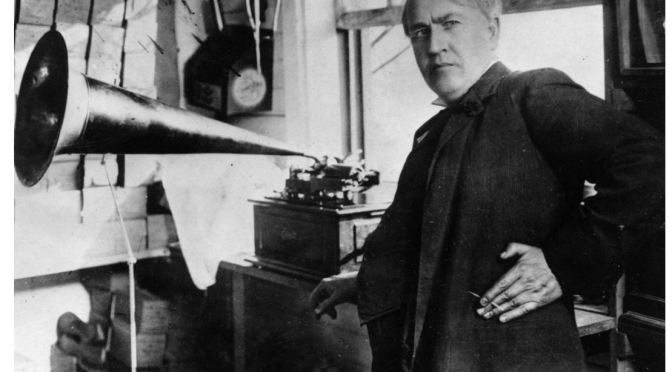
Thomas Alva Edison’s self-proclaimed greatest invention, the phonograph, won him overnight fame. Journalists would marvel that such an acoustic revolution, adding a whole new dimension to human memory, could have been accomplished by a man half deaf in one ear and wholly deaf in the other.
In February 1877, the same month that saw Edison turn 30 and show his first streaks of silver hair, he and his fellow inventor Charles Batchelor began a new series of experiments on what they called, variously, the “telephonic telegraph,” the “speaking telegraph” and the “talking telephone.”
To read more: https://www.wsj.com/articles/the-making-of-thomas-edisons-miraculous-machine-11571324989

New Books: Frank Lloyd Wright Bio “Plagued By Fire” By Paul Hendrickson
From a Wall Street Journal online review:
 Whereas most Wright biographies build from one structure to the next, this one caroms from one digression to the next. Mr. Hendrickson spins miniature biographies of the people who commissioned Wright to build their homes and office buildings. An array of midcentury figures appears: e.g., Glenway Wescott, the novelist and poet who rubbed shoulders with Gertrude Stein in Paris and whose sister commissioned one of Wright’s homes; and Clarence Darrow, the renowned lawyer, who waded into the murk of Wright’s personal life when a disgruntled housekeeper attempted to use the Mann Act to have Wright arrested. We also meet the little-known residents of various structures. Seth Peterson, for instance, dreamed of living in a Wright home so powerfully that he camped out in the one he commissioned as it was being built.
Even when you grant how exposed to the elements an architect’s work may be, Frank Lloyd Wright appears to have been an insurer’s nightmare. If a building could shake, burn or flood, time and again Wright’s structures did. Like the exquisite Rose Pauson House in Phoenix, which lasted a mere year before succumbing to fire. Or the Imperial Hotel in Tokyo, with its gorgeous H-shaped guest wing, rocked by an earthquake on the day it opened. The Johnson Wax building in Racine, Wis., was so porous that office staff were known to keep buckets by their desk on rainy days.
To read more: https://www.wsj.com/articles/plagued-by-fire-review-the-spirit-in-the-form-11570806240?mod=ig_booksoctober12
 Boomers Daily