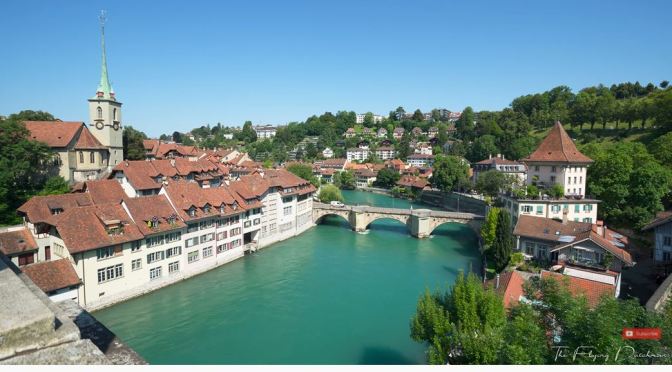
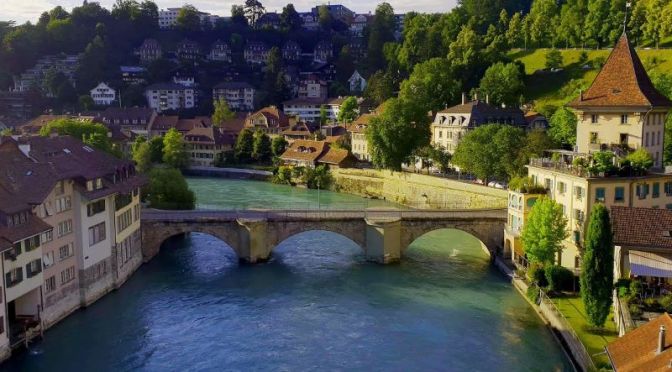
Bern, the capital city of Switzerland, is built around a crook in the Aare River. It traces its origins back to the 12th century, with medieval architecture preserved in the Altstadt (Old Town). The Swiss Parliament and diplomats meet in the Neo-Renaissance Bundeshaus (Federal Palace). The Französische Kirche (French Church) and the nearby medieval tower known as the Zytglogge both date to the 13th century.
Bern, also spelled Berne, city, capital of Switzerland and of Bern canton, in the west-central part of the country. It lies along a narrow loop of the Aare River. The existence of the ancient castle of Nydegg, guarding a crossing over the Aare, probably led Berthold V, duke of Zähringen, to found Bern in 1191 as a military post on the frontier between the German-speaking Alemanni and the French-speaking inhabitants of Burgundy. After the extinction of the Zähringen dynasty (1218), Bern became a free imperial city. Gradually it extended its power by acquiring surrounding territory, becoming an independent state that in 1353 entered the Swiss Confederation, which it soon began to lead. After a devastating fire ravaged the predominantly wood-built town in 1405, Bern was rebuilt with sandstone. Although much of the surrounding metropolis has since been modernized, the centre (Old Bern) still remains intact from that period.
Bern, the capital city of Switzerland, is built around a crook in the Aare River. It traces its origins back to the 12th century, with medieval architecture preserved in the Altstadt (Old Town). The Swiss Parliament and diplomats meet in the Neo-Renaissance Bundeshaus (Federal Palace). The Französische Kirche (French Church) and the nearby medieval tower known as the Zytglogge both date to the 13th century.
Video timeline: 0:00 Highlights 1:51 Parliament Building 3:52 View from Nydeggbrücke 6:04 Münsterplattform 6:50 Cathedral of Bern 7:32 Zytglogge 8:51 Going up to Gurten 10:17 View of Bern from above the hill 11:02 Rose Garden
News, Views and Reviews For The Intellectually Curious

 Boomers Daily