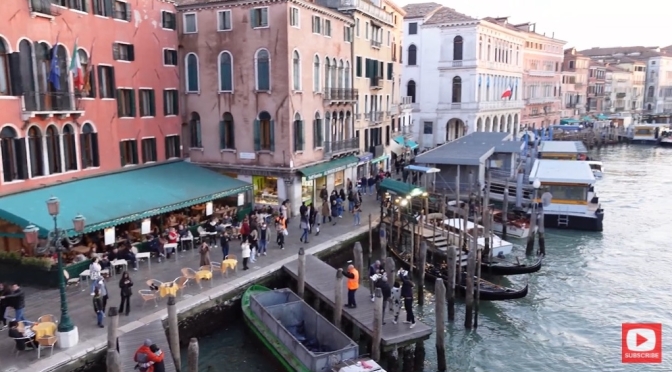
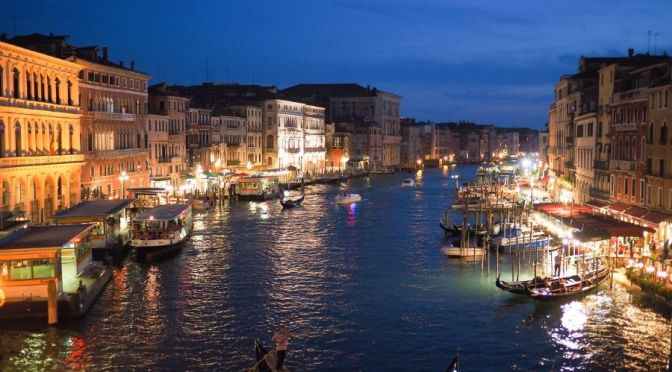
Venice, the capital of northern Italy’s Veneto region, is built on more than 100 small islands in a lagoon in the Adriatic Sea. It has no roads, just canals – including the Grand Canal thoroughfare – lined with Renaissance and Gothic palaces. The central square, Piazza San Marco, contains St. Mark’s Basilica, which is tiled with Byzantine mosaics, and the Campanile bell tower offering views of the city’s red roofs.
Video timeline: 0:00:00 – Intro 0:02:02 – CAMPO ERBERIA 0:05:10 – RUGA VECCHIA S. GIOVANNI 0:06:30 – C. DELLA MADONNA 0:07:42 – RIVA DEL VIN 0:08:34 – RIALTO BRIDGE 0:16:44 – CAMPO S. BORTOLOMIO 0:18:31 – GRAND CANAL 0:21:18 – PONTE DE L’OGIO 0:22:13 – SALIZADA S. GIOVANNI GRISOSTOM 0:23:02 – CORTE DEL TEATRO 0:24:48 – CORTE SECONDA DEL MILION 0:25:46 – CALLE SCALETA 0:27:08 – CALLE CARMINATI 0:27:46 – CAMPO SAN LIO 0:28:40 – SALIZADA S. LIO 0:30:52 – CALLE DEL MONDO NOVO 0:32:37 – CAMPO SANTA MARIA FORMOSA 0:34:56 – CAMPIELLO QUERINI STAMPALIA 0:36:04 – FONDAMENTA DEL REMEDIO 0:37:06 – PONTE DEL REMEDIO
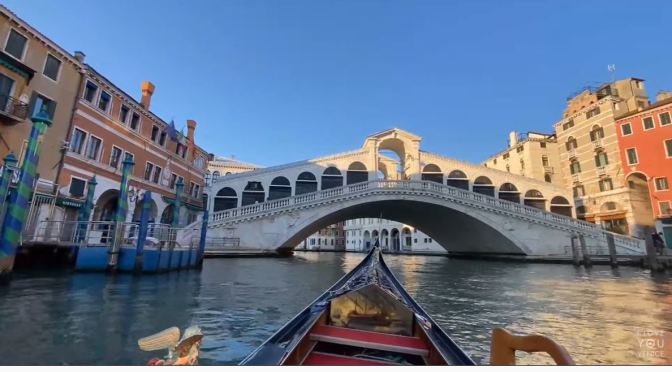
The gondola is a traditional venetian boat used to move around the city of Venice Italy. In the absence of roads, the inhabitants couldn’t use horses, and the size of the canals required a thin and flat bottomed embarcation. The venitian gondola surely answers all those problems.
The construction of a gondola requires a lot of time ( about a year ) and some well selected pieces of wood (8 different types). The craftsman starts by building the skeleton, then adds the sides and keeps building on top of the structure.
Venice, the capital of northern Italy’s Veneto region, is built on more than 100 small islands in a lagoon in the Adriatic Sea. It has no roads, just canals – including the Grand Canal thoroughfare – lined with Renaissance and Gothic palaces. The central square, Piazza San Marco, contains St. Mark’s Basilica, which is tiled with Byzantine mosaics, and the Campanile bell tower offering views of the city’s red roofs.
The best-known form of transport on the waterways of Venice is the gondola. Today there are only several hundred of these unique, keelless boats left, and they have long been outnumbered by other vessels. But their elegant, sleek shape and gleaming black paintwork have made them a symbol of Venice. Many writers have described the romance of Venice by gondola, and many tourists are still willing to pay high prices to be rowed at twilight through the canals to the singing of a gondolier. But it is many years since gondoliers could recite verses from such Italian poets as Ariosto or Tasso while maneuvering their amazingly flexible craft around the sharp bends of the minor canals. A number of gondolas still serve as ferries across the Grand Canal, but the cost of maintenance makes their ultimate disappearance likely.
News, Views and Reviews For The Intellectually Curious


 Boomers Daily