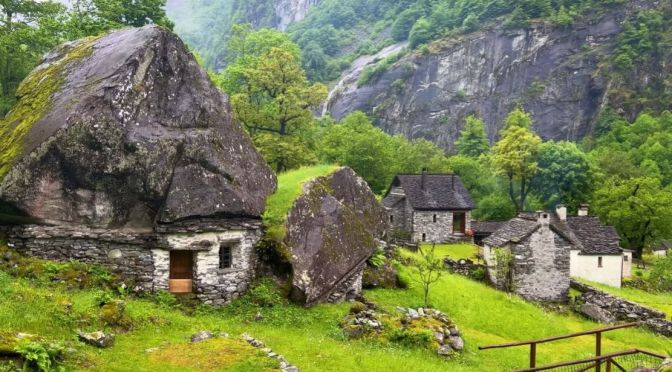
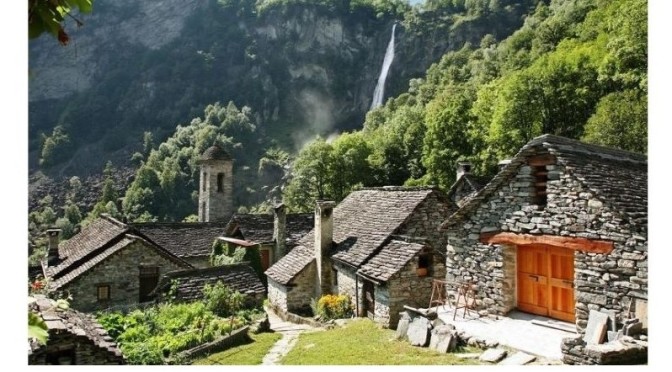
The Traveler Films (June 1, 2023) – Sabbione is a captivating village located in the Val Bavona, one of the wildest valleys in the Swiss Alps. Bordering Ticino, it has remained frozen in the 16th century. The valley is only inhabited in summertime and has opted to remain true to its rustic roots, even shunning electricity.
Renowned for its resemblance to a magical Hobbit village and surrounded by stunning natural landscapes, this hidden gem boasts charming rocky and stone houses, winding streets, an ancient church, cascading waterfalls, and towering mountains. Every corner exudes a whimsical atmosphere, enchanting visitors with its fairy-tale-like beauty.
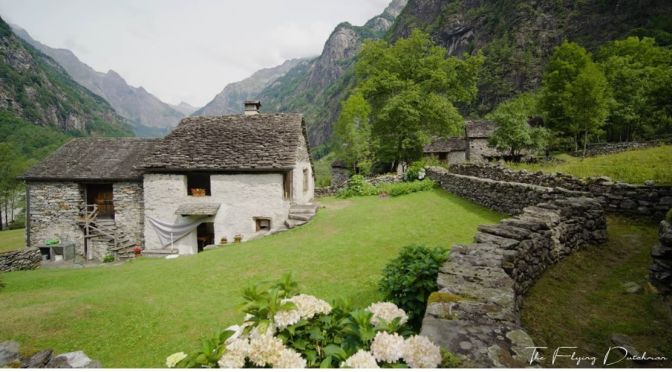
The Flying Dutchman (November 2022) – A scenic walking tour in Roseto, Roseto is situated nearby to Foroglio and San Carlo (Bavona), in Southern Switzerland.
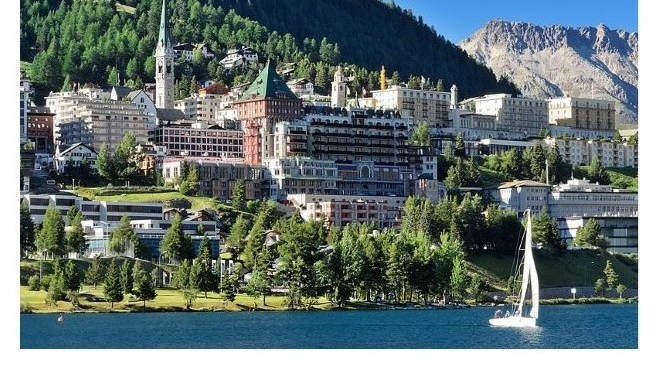
Saint Moritz, a town, or Gemeinde (commune), Graubünden canton, southeastern Switzerland. Saint Moritz lies in the Oberengadin (Upper Inn Valley) and is surrounded by magnificent Alpine peaks. The town consists of the Dorf (village), the Bad (spa), and the hamlets of Suvretta and Champfèr. Originally known for its curative mineral springs, it became a fashionable spa and summer resort in the 17th century. Since the late 19th century, it has developed as one of the world’s most famous winter-sport centres and was the scene of the Winter Olympic Games in 1928 and 1948. The resort is on an international highway, is linked by rail with international lines, and has an airport at Samedan, just northeast. Saint Moritz depends on tourism and the hotel industry.
The town of Sonlerto lies in Bavona Valley (Val Bavona), arguably the wildest one among the valleys of Ticino. This spectacular side valley is part of the Maggia Valley. The whole region is part of the Lepontine Alps – a mountain range that covers various parts of Switzerland (Valais, Ticino, Uri, Graubünden) and Italy (Piedmont and Lombardy).
The Bavona Valley has seen massive rocks fall from mountains time and time again. Sometimes the stones are as big as houses. Locals then build new houses next to the stones after they fall. Locals refer to it as Splui. As such, it is no surprise that the houses in this area are built from stone.
Ticino is an Italian-speaking region in southern Switzerland with palm-lined lakes and sharp Alpine peaks. Its architecture, cuisine and culture is closely related to that of neighboring Italy. Bellinzona, the capital of Ticino, is home to medieval castles. Lugano, a town on glacial Lake Lugano, is known for its waterfront promenade and Piazza della Riforma, a square lined with neoclassical buildings.
Locarno is an Italian-speaking resort city in southern Switzerland, on Lake Maggiore at the base of the Alps. It’s known for its sunny climate. Founded in the 12th century, the old town’s Castello Visconteo houses the Museo Civico, which showcases Roman antiquities. The 15th-century Santuario della Madonna del Sasso, an art-filled pilgrimage site overlooking the city, can be reached by funicular railway.
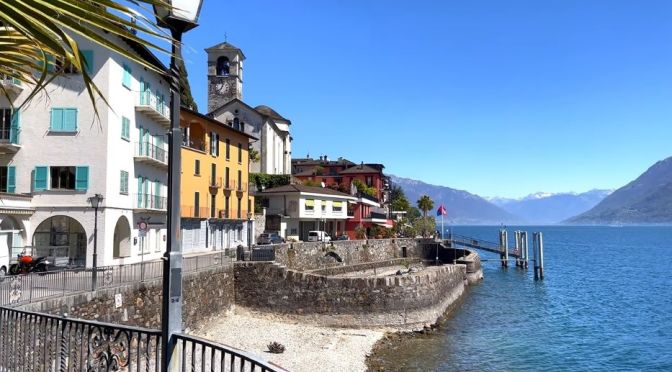
Brissago is a municipality in the district of Locarno in the canton of Ticino in Switzerland. A wonder swiss town, lying at the lowest point in Switzerland, just 197 metres above sea level, and perched between the shores of Lake Maggiore and the steep mountains behind, Brissago is a small town on the Italian frontier.
The lowest and oldest part of the village is clustered around the beautiful Renaissance church of St. Peter and Paul, surrounded by centuries-old cypresses. In the narrow lanes leading down to the lake you will find some picturesque spots to admire: gardens where lemons, oranges and cedars grow in the open air, as well as beautiful mansions. Brissago is famous not only for its tobacco and cigar factory, but also for its islands, which seen from above look like bright green spots in the blue of the lake.
Between 1885 and 1928 Baroness Antonietta Saint-Léger, a Russian of German origin, planted a botanical garden designed as an earthly paradise, and her successor, the department store king Max Emden, continued her work. Today the neo-classical villa contains a restaurant and the administration offices of the Botanical Park of Canton Ticino. Their plants are still there, together with the Himalayan cinnamon with its scent of camphor, the Madagascar gladiolus, the bald cypress from the swamps of North America with its trunk under water, and numerous other exotic species.
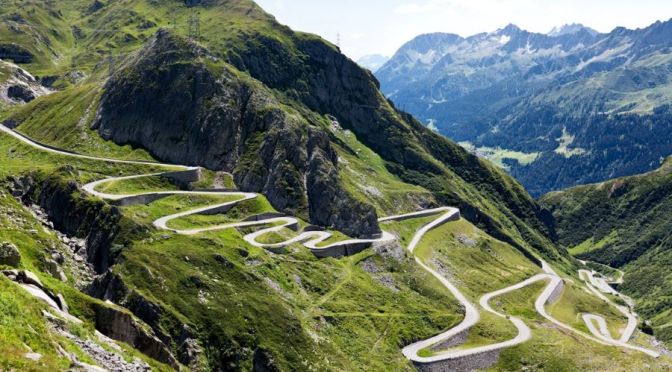
The Gotthard Pass or St. Gotthard Pass at 2,106 m is a mountain pass in the Alps traversing the Saint-Gotthard Massif and connecting northern and southern Switzerland.
The pass lies between Airolo in the Italian-speaking canton of Ticino, and Andermatt in the German-speaking canton of Uri, and connects further Bellinzona to Lucerne, Basel, and Zurich. The Gotthard Pass lies at the hearth of the Gotthard, an important north-south axis in Europe, and it is crossed by three major traffic tunnels, each being the world’s longest at the time of their construction: the Gotthard Rail Tunnel (1882), the Gotthard Road Tunnel (1980) and the Gotthard Base Tunnel (2016). With the Lötschberg to the west, the Gotthard is one of the two main north-south routes through the Swiss Alps. Since the Middle Ages, transit across the Gotthard played an important role in Swiss history, the region north of Gotthard becoming the nucleus of the Swiss Confederacy in the early 14th century.
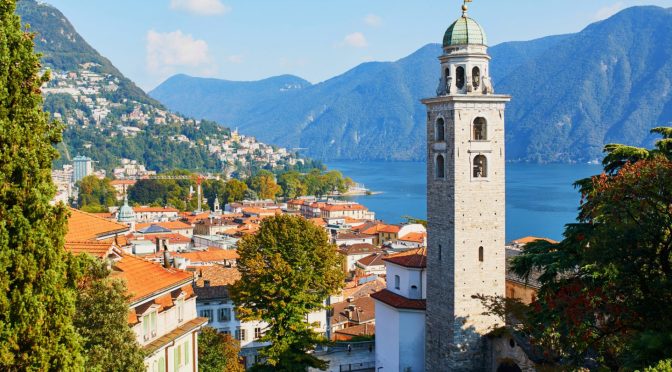
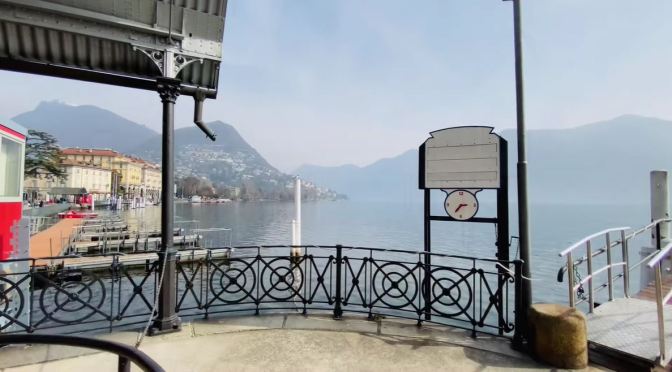
Lugano is a city in southern Switzerland’s Italian-speaking Ticino region. Its Swiss-Mediterranean mix of cultures is closely related to that of Italy’s northern Lombardy region. This mix is reflected in its architecture and cuisine. The city stands on the northern shore of glacial Lake Lugano, surrounded by mountains. Its main square, Piazza della Riforma, is ringed with pastel-colored, neoclassical palazzi.
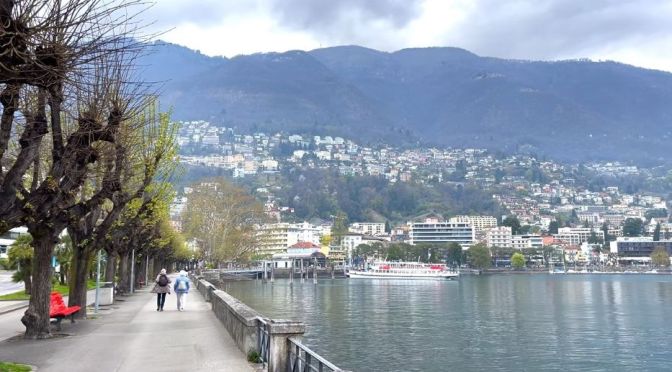
Lake Lugano is a glacial lake which is situated on the border between southern Switzerland and northern Italy. The lake, named after the city of Lugano, is situated between Lake Como and Lago Maggiore.
Lugano is a city in southern Switzerland’s Italian-speaking Ticino region. Its Swiss-Mediterranean mix of cultures is closely related to that of Italy’s northern Lombardy region. This mix is reflected in its architecture and cuisine. The city stands on the northern shore of glacial Lake Lugano, surrounded by mountains. Its main square, Piazza della Riforma, is ringed with pastel-colored, neoclassical palazzi.
News, Views and Reviews For The Intellectually Curious


 Boomers Daily