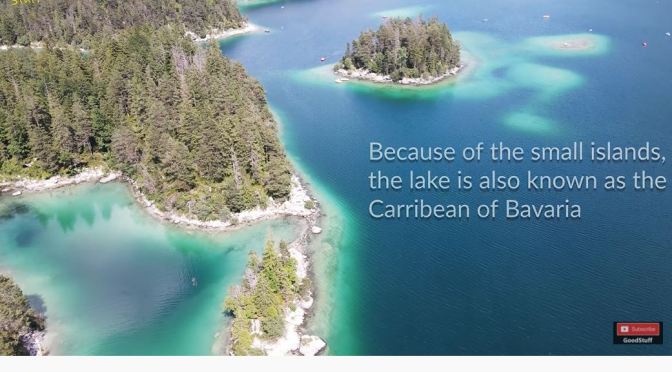
Eibsee is a lake in Bavaria, Germany, 9 km southwest of Garmisch-Partenkirchen and roughly 100 km southwest of Munich. It is at the northerly base of the Zugspitze, Germany’s highest mountain.
Known as the Carribean of Bavaria, this lake in Germany has 8 unusual Islands and it is absolutely breath taking.
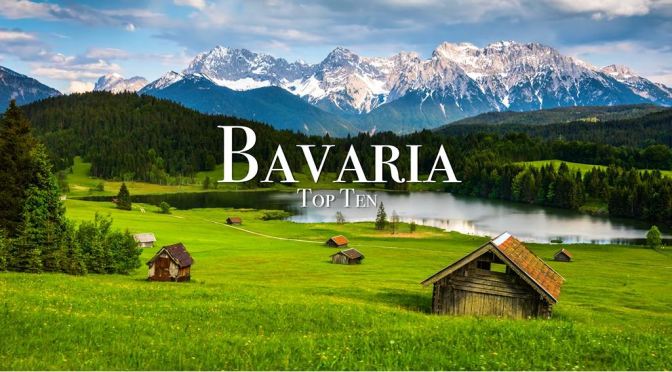
Bavaria, officially the Free State of Bavaria, is a federal state in the south-east of Germany. With an area of 70,550.19 square kilometres, Bavaria is the largest German state by land area, comprising roughly a fifth of the total land area of Germany.
Landshut is a city straddling the River Isar in Bavaria, southern Germany. It’s known for the medieval Trausnitz Castle, with its views across the old town. Within the castle is the Chamber of Art and Curiosities, displaying artifacts collected by the Wittelsbach dukes. In the old town, Gothic St. Martin’s Church has a tall brick tower. Close to the Isar is the Ländtor, a gate from the town’s medieval fortifications.
Munich, Bavaria’s capital, is home to centuries-old buildings and numerous museums. The city is known for its annual Oktoberfest celebration and its beer halls, including the famed Hofbräuhaus, founded in 1589. In the Altstadt (Old Town), central Marienplatz square contains landmarks such as Neo-Gothic Neues Rathaus (town hall), with a popular glockenspiel show that
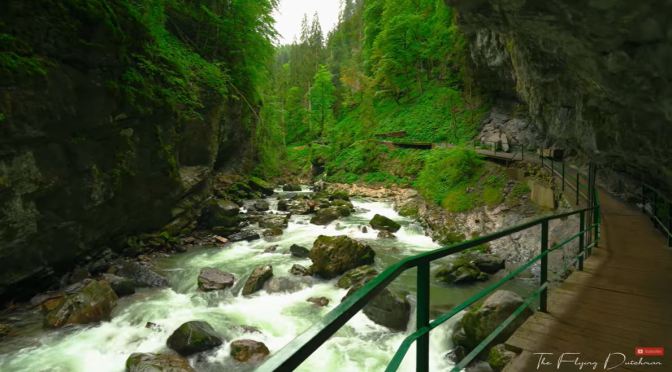
The Breitachklamm is a gorge created by the river Breitach in the Allgäu region in Southern Germany. It is located at the exit of the Kleinwalsertal near Tiefenbach, a city district of Oberstdorf. It is one of the deepest gorges of the Bavarian Alps and the deepest rocky gorge of Central Europe.
Every year around 300.000 visitors walk the 2.5 km long path through the gorge. The upper entrance of the Breitachklamm is located near the Walserschanz in Austria, with limited parking space, whereas the lower one in Oberstdorf-Tiefenbach offers a visitor center and ample parking. The Breitachklamm was formed only during the last 10,000 years after the Würm ice age. Glaciers had eroded soft rocks, and hard rocks remained. When the glaciers had melted, the Breitach river had to grind its way through the hard rocks, over a distance of 2.5 km and up to 150 metres (490 ft) deep.
Passau / Germany is a Bavarian city at the Austrian border. Passau is called the “City of Three Rivers” as it lies at the confluence of the Danube, Inn and Ilz rivers. On our tour we start at the St. Stephen’s Cathedral, featuring distinctive onion-domed towers and an organ with 17,974 pipes. We walk down to the banks of the Inn river and check out the the old town which is known for its baroque architecture. Soon we are at the Three River Conjunction (Dreiflüsseeck) from where we walk back along the Danube (Donau) river on the Donaukai. This leads us back to the central city where we get to the train station and end our Passau tour.
Timeline: 0:00 St. Stephen’s Cathedral 4:30 Along the Inn river 10:00 Back to the Old Town 17:00 Three River Conjunction (Dreiflüsseeck) 21:00 Donaukai 26:00 Central Old Town 28:30 Old Town Hall 29:30 Walking West 37:30 Western Old Town 44:00 Modern City Center 49:00 To the Train Station
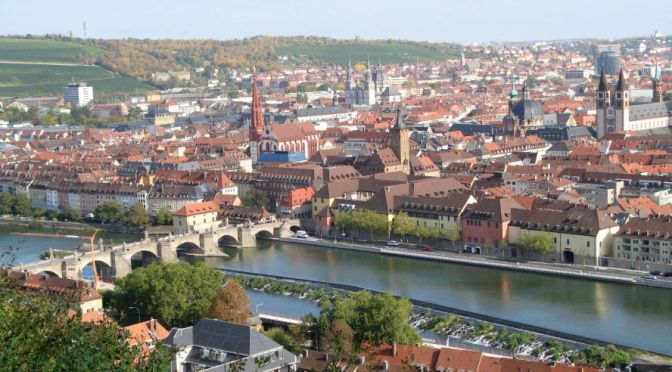
Würzburg is a city in Germany’s Bavaria region. It’s known for lavish baroque and rococo architecture, particularly the 18th-century Residenz palace, with ornate rooms, a huge fresco by Venetian artist Tiepolo and an elaborate staircase. Home to numerous wine bars, cellars and wineries, Würzburg is the center of the Franconian wine country, with its distinctive bocksbeutel (bottles with flattened round shapes).
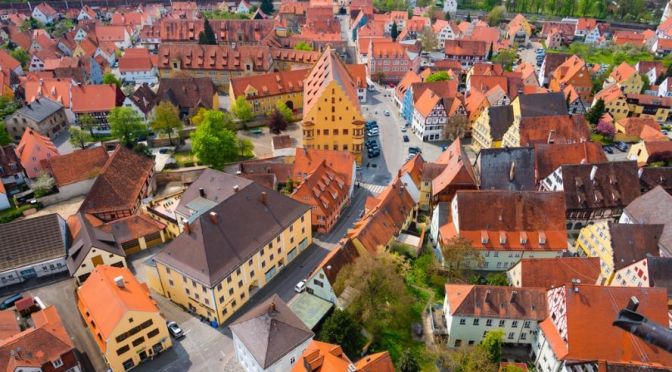
Nördlingen is a town in Bavaria, Germany. Its old town is encircled by well-preserved medieval walls with towers and covered parapet paths. The city center is anchored by the massive Gothic St. George’s Church. Its tower, called the Daniel, has views across town. The Rathaus (town hall), with its gabled roof and towers, is one of several medieval buildings, some half-timbered, on the main square.
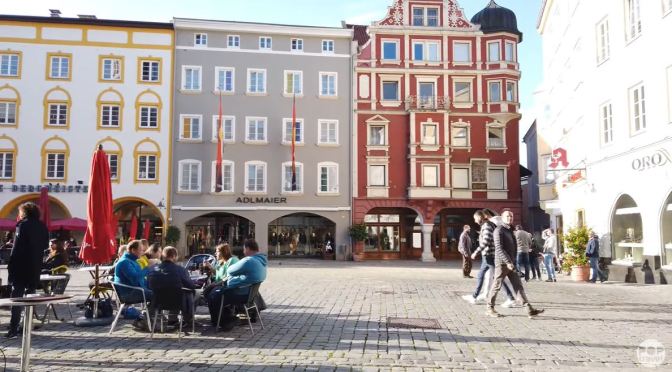
Rosenheim is a city in Bavaria, southeastern Germany. Its Lokschuppen Rosenheim arts center hosts exhibits in a converted 19th-century railway depot. Max-Josefs-Platz, the market square, is surrounded by arcades, cafes and centuries-old townhouses. The Municipal Museum has displays of local history, including Roman relics. To the east, Simssee is a lake with trails in the foothills of the Bavarian Alps.
Bayreuth is a town on the Red Main river in Bavaria, Germany. At its center is the Richard Wagner Museum in the composer’s former home, Villa Wahnfried. Wagner’s operas are performed at the Bayreuther Festspielhaus, home of the annual Bayreuth Festival. On the eastern outskirts, the Hermitage Gardens surrounds the Altes Schloss Eremitage palace and the Temple of the Sun (Sonnentempel), honoring the god Apollo.
News, Views and Reviews For The Intellectually Curious




 Boomers Daily