

From NY Times article by Jane E. Brody:
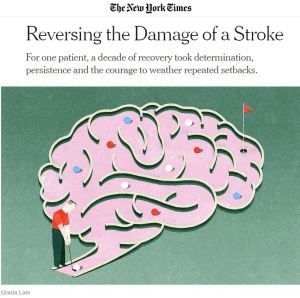 The learning curve was steep: “I couldn’t read; I couldn’t write. I could see the hospital signs, the elevator signs, the therapists’ cards, but I couldn’t understand them,” he wrote. The aphasia — the inability to understand or express speech — “had beaten and battered” his pride.
But he refused to give up. With age and prestroke physical conditioning on his side, he had convinced himself that “100 percent recovery was possible as long as I pushed hard enough.”
Strange as it may seem, the stroke Ted Baxter suffered in 2005 at age 41, leaving him speechless and paralyzed on his right side, was a blessing in more ways than one. Had the clot, which started in his leg, lodged in his lungs instead of his brain, the doctors told him he would have died from a pulmonary embolism.
And as difficult as it was for him to leave his high-powered professional life behind and replace it with a decade of painstaking recovery, the stroke gave his life a whole new and, in many ways, more rewarding purpose.
Read more by clicking link below:
www.nytimes.com/2019/07/01/well/live/reversing-the-damage-of-a-massive-stroke.html

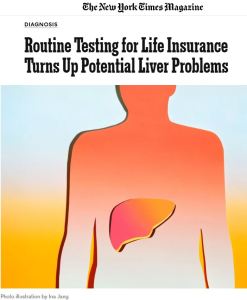 “The doctor asked whether he was sure that he had not taken anything else when he was sick? No acetaminophen? No herbs or supplements? The man was certain. Moreover, his labs were abnormal even before he took the antibiotics. The doctor hypothesized that the man’s liver had been a little inflamed from some minor injury — maybe a virus or other exposure — and the antibiotic, which is cleared through the liver, somehow added insult to injury.”
 Syndicated columnist Mark Shields and New York Times columnist David Brooks join Judy Woodruff to discuss the week’s political news, including the first debates for 2020 Democratic candidates, whether that party has shifted too far to the left to be viable and Supreme Court decisions on partisan gerrymandering and including a citizenship question on the 2020 census.
 Boomers Daily