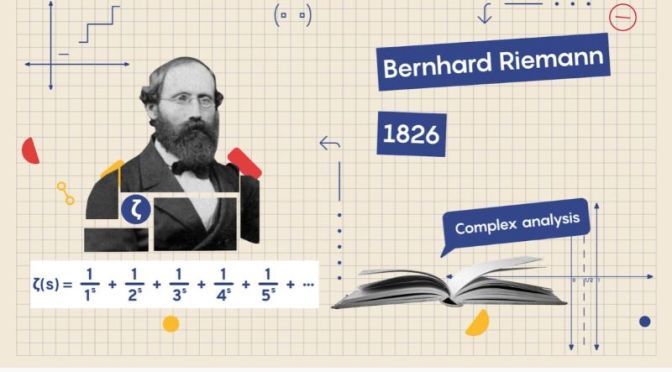
The Riemann hypothesis is the most notorious unsolved problem in all of mathematics. Ever since it was first proposed by Bernhard Riemann in 1859, the conjecture has maintained the status of the “Holy Grail” of mathematics. In fact, the person who solves it will win a $1 million prize from the Clay Institute of Mathematics. So, what is the Riemann hypothesis? Why is it so important? What can it tell us about the chaotic universe of prime numbers? And why is its proof so elusive? Alex Kontorovich, professor of mathematics at Rutgers University, breaks it all down in this comprehensive explainer.
In mathematics, the Riemann hypothesis is a conjecture that the Riemann zeta function has its zeros only at the negative even integers and complex numbers with real part. Many consider it to be the most important unsolved problem in pure mathematics.
For mathematicians and computer scientists, 2020 was full of discipline-spanning discoveries and celebrations of creativity. We’d like to take a moment to recognize some of these achievements.
1. A landmark proof simply titled “MIP* = RE” establishes that quantum computers calculating with entangled qubits can theoretically verify the answers to an enormous set of problems. Along the way, the five computer scientists who authored the proof also answered two other major questions: Tsirelson’s problem in physics, about models of particle entanglement, and a problem in pure mathematics called the Connes embedding conjecture.
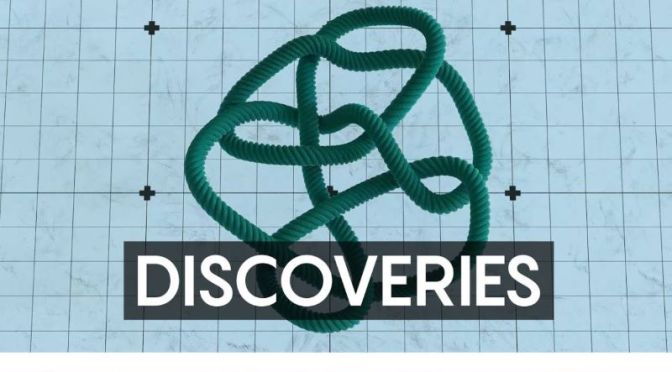
2. In February, graduate student Lisa Piccirillo dusted off some long-known but little-utilized mathematical tools to answer a decades-old question about knots. A particular knot named after the legendary mathematician John Conway had long evaded mathematical classification in terms of a higher-dimensional property known as “sliceness.” But by developing a version of the knot that yielded to traditional knot analysis, Piccirillo finally determined that the Conway knot is not “slice.”
3. For decades, mathematicians have used computer programs known as proof assistants to help them write proofs — but the humans have always guided the process, choosing the proof’s overall strategy and approach. That may soon change. Many mathematicians are excited about a proof assistant called Lean, an efficient and addictive proof assistant that could one day help tackle major problems. First, though, mathematicians must digitize thousands of years of mathematical knowledge, much of it unwritten, into a form Lean can process. Researchers have already encoded some of the most complicated mathematical ideas, proving in theory that the software can handle the hard stuff. Now it’s just a question of filling in the rest.
News, Views and Reviews For The Intellectually Curious

 Boomers Daily