

From Christie’s Magazine (June 4, 2020):
The Tokugawa dynasty would rule until 1868, and the era became known as the Edo period…It was a time of peace and prosperity, and the arts flourished. Particularly splendid were the ukiyo-e (‘woodblock prints’) — works known for their unusual viewpoints, abrupt cropping, exquisite stylisation, and patches of vivid, unshaded colour.
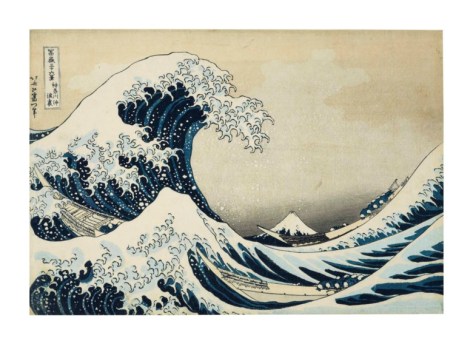
‘Kitagawa Utamaro (1753-1806), Katsushika Hokusai (1760-1849) and Utagawa Hiroshige (1797-1858) belong in the pantheon of all-time great artists,’ says Anastasia von Seibold, senior specialist in Japanese Art at Christie’s.
The introduction of colour: nishiki-e
Printing in more than one colour was tricky: it wasn’t until the 1740s that green and pink were tentatively introduced. A huge breakthrough came in 1765, when Suzuki Harunobu (1724-1770) mastered a process that accommodated an array of colours.
 Boomers Daily