Tag Archives: Microscopic Photography

Microbes: A Microscopic View Of The Human Body

Among the unknown worlds in the universe, we can count our very own bodies. Like planet earth, each of us is made up of fascinating landscapes that are home to all kinds of wildlife.

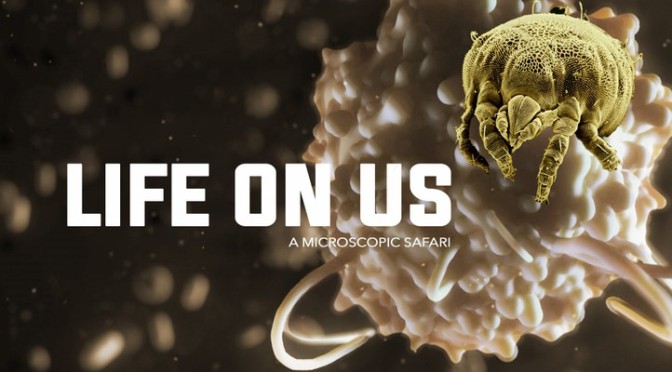
The film takes the viewer on a unique microscopic safari, where we encounter some of the myriad creatures that live, thrive, compete, feed, are born and die on or inside our bodies. In fact, microscopic creatures play a more powerful role than we know: These life forms impact our health, our life expectancy, our physique and even our behavior.

The film renders these hidden worlds visible with the help of special effects: Combining cinematic electron microscopy with a super macro film technique. The documentary explains cutting-edge scientific findings, by turns surprising, enlightening and amazing. It raises questions about who we are, and how we exist in the unexplored, complex ecosystems that help constitute us.

We are born 100% human, but will die 90% microbial. Between these two points in our lives lies the unexplored terrain of ‘Life on Us’.
Photography: The ‘Micro-Beauty’ Of Plankton

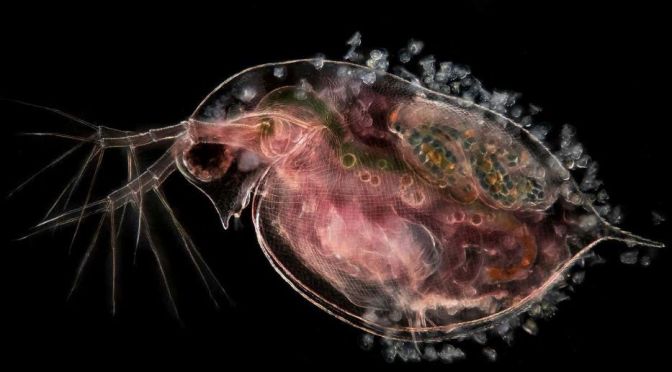
Plankton form the base of marine and freshwater food webs. They consist of phytoplankton (plants) and zooplankton (animals). Their name derives from the Greek word for “drifter”, since they are too tiny to fight tides or currents. Phytoplankton oxygenate the ocean through photosynthesis, enabling marine animals to thrive, and produce about half the world’s oxygen.  Yet despite their abundance and fundamental role for life on Earth, their microscopic nature makes them easy to ignore. 

“The most exciting thing of the whole project was the discovery of this parallel, beautiful, strange, complex world, ” says photographer Jan van IJken, “there’s so much beauty around the corner that you’re not aware of”. Inspired by the microscopic beauty of plankton – and their predators, van IJken embarked on a photo and film project called Planktonium.  Over a year, he collected a diverse array of species from various Dutch waters, including puddles, lakes and seas, “Every time it was [a] new discovery”, he says. “There’s such a diversity, it makes you humble”. 

Back in his studio, Van IJken used various microscope and photography techniques, including dark field microscopy and timelapse photography to capture the “beauty, fine detail and incredible shapes” of his subjects. To add impact to the film, he commissioned Norweigan musician, Jana Winderen to create a soundscape, made using aquatic audio recordings including of fish, icebergs, small crustaceans which made a crackling sound and even the sounds of “fish howling to the moon”.

Read more: https://www.newscientist.com/article/…