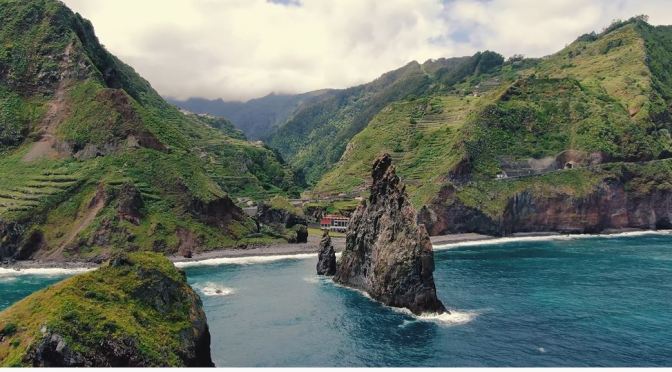
Madeira, an autonomous region of Portugal, is an archipelago comprising 4 islands off the northwest coast of Africa. It is known for its namesake wine and warm, subtropical climate.
Video timeline: 0:00 – Intro 0:31 – Ponta do Sol & Anjos Waterfall 1:23 – Ponta do Pargo 1:48 – Ponta de São Lourenço 2:39 – Cabo Girão 3:04 – Fanal Forest 4:05 – São Vicente Church 4:30 – Véu da Noiva & Seixal 5:12 – Ribiera da Janela 5:27 – Arco de São Jorge & Boaventura 5:49 – Pico do Ariero 7:29 – Pico Ruivo 8:12 – Outro
The main island of Madeira is volcanic, green and rugged, with high cliffs, pebbly beaches and settlements on deltas of the Fajã River. Capital Funchal has botanic gardens and is known for its harbor and a large New Year’s fireworks show.
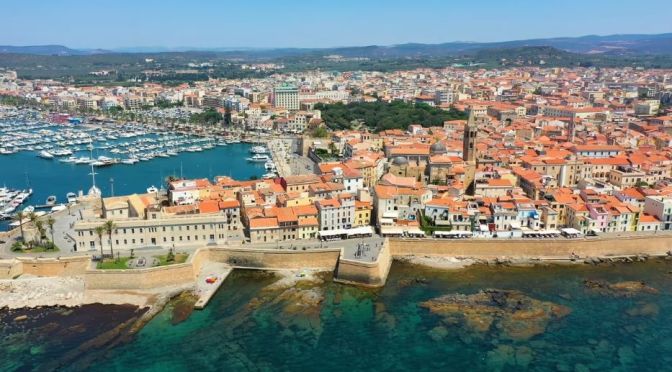
Sardinia is a large Italian island in the Mediterranean Sea. It has nearly 2,000km of coastline, sandy beaches and a mountainous interior crossed with hiking trails. Its rugged landscape is dotted with thousands of nuraghi – mysterious Bronze Age stone ruins shaped like beehives. One of the largest and oldest nuraghi is Su Nuraxi in Barumini, dating to 1500 B.C.
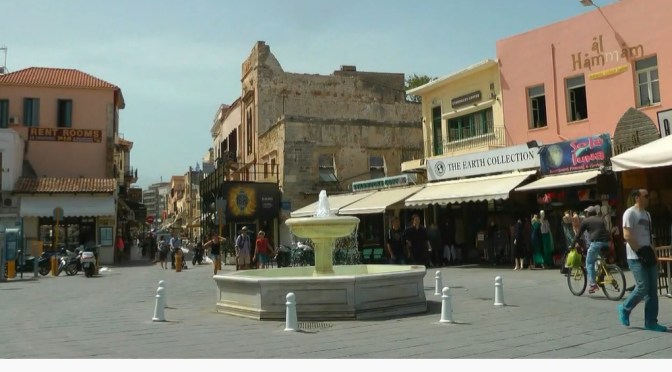
Crete is the largest and most populous of the Greek islands, the fifth largest island in the Mediterranean Sea, after Sicily, Sardinia, Cyprus, and Corsica. Crete rests approximately 160 km south of the Greek mainland. It has an area of 8,336 km2 and a coastline of 1,046 km .
It bounds the southern border of the Aegean Sea, with the Sea of Crete (or North Cretan Sea) to the north and the Libyan Sea (or South Cretan Sea) to the south. Its capital and largest city is Heraklion, on the north shore of the island. As of 2020, the region had a population of 636,504.
Humans have inhabited the island since at least 130,000 years ago, during the Paleolithic age. Crete was the centre of Europe’s first advanced civilization, the Minoans, from 2700 to 1420 BC. The Minoan civilization was overrun by the Mycenaean civilization from mainland Greece.
Crete was later ruled by Rome, then successively by the Byzantine Empire, Andalusian Arabs, the Venetian Republic, and the Ottoman Empire. In 1898 Crete, whose people had for some time wanted to join the Greek state, achieved independence from the Ottomans, formally becoming the Cretan State. Crete became part of Greece in December 1913. The island is mostly mountainous, and its character is defined by a high mountain range crossing from west to east.
It includes Crete’s highest point, Mount Ida, and the range of the White Mountains (Lefka Ori) with 30 summits above 2000 metres in altitude and the Samaria Gorge, a World Biosphere Reserve. Crete forms a significant part of the economy and cultural heritage of Greece, while retaining its own local cultural traits (such as its own poetry and music). The Nikos Kazantzakis airport at Heraklion and the Daskalogiannis airport at Chania serve international travelers. The palace of Knossos, a Bronze Age settlement and ancient Minoan city, is also located in Heraklion.
News, Views and Reviews For The Intellectually Curious

 Boomers Daily