
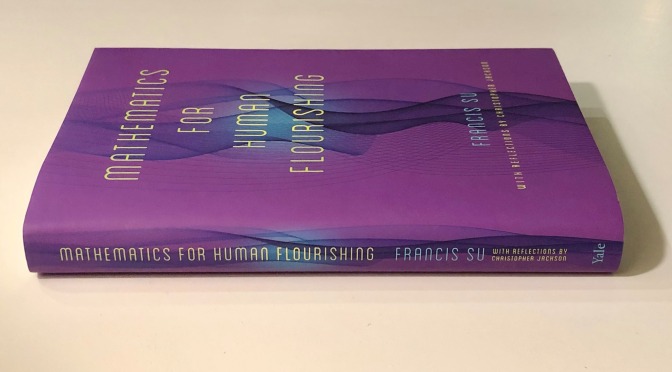
“Human flourishing refers to a wholeness — of being and doing, of realizing one’s potential and helping others do the same, of acting with honor and treating others with dignity, of living with integrity even in challenging circumstances. It is not the same as happiness, and it is not just a state of mind. The well-lived life is a life of human flourishing.”
An inclusive vision of mathematics—its beauty, its humanity, and its power to build virtues that help us all flourish
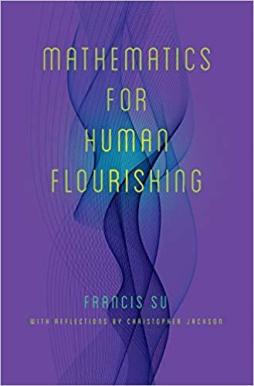 For mathematician Francis Su, a society without mathematical affection is like a city without concerts, parks, or museums. To miss out on mathematics is to live without experiencing some of humanity’s most beautiful ideas.
In this profound book, written for a wide audience but especially for those disenchanted by their past experiences, an award‑winning mathematician and educator weaves parables, puzzles, and personal reflections to show how mathematics meets basic human desires—such as for play, beauty, freedom, justice, and love—and cultivates virtues essential for human flourishing. These desires and virtues, and the stories told here, reveal how mathematics is intimately tied to being human. Some lessons emerge from those who have struggled, including philosopher Simone Weil, whose own mathematical contributions were overshadowed by her brother’s, and Christopher Jackson, who discovered mathematics as an inmate in a federal prison. Christopher’s letters to the author appear throughout the book and show how this intellectual pursuit can—and must—be open to all.
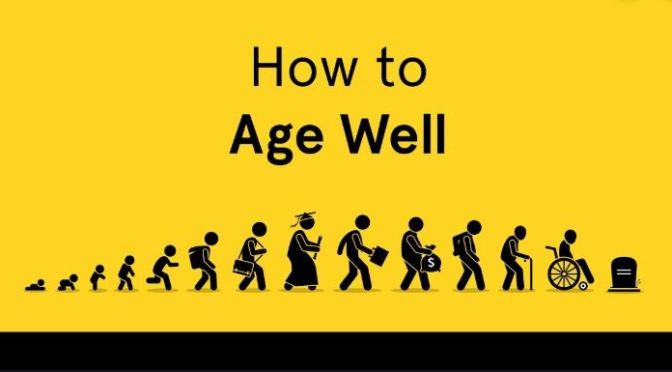
 Six factors measured by age 50 were excellent predictors of those who would be in the “happy-well” group–the top quartile of the Harvard men–at age 80: a stable marriage, a mature adaptive style, no smoking, little use of alcohol, regular exercise, and maintenance of normal weight. At age 50, 106 of the men had five or six of these factors going for them, and at 80, half of this group were among the happy-well. Only eight fell into the “sad-sick” category, the bottom quarter of life outcomes. In contrast, of 66 men who had only one to three factors at age 50, not a single one was rated happy-well at 80. In addition, men with three or fewer factors, though still in good physical health at 50, were three times as likely to be dead 30 years later as those with four or more.
 Boomers Daily