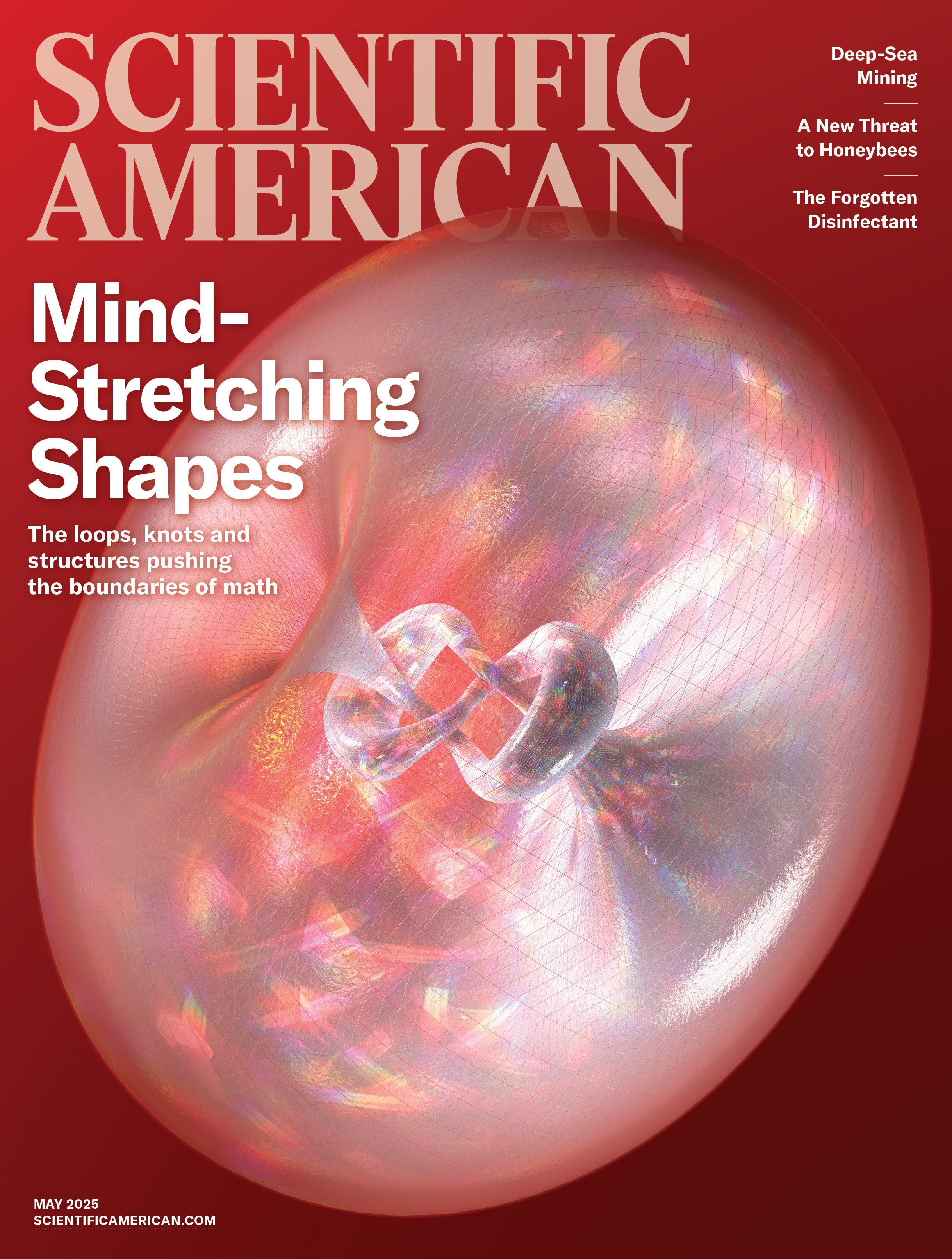
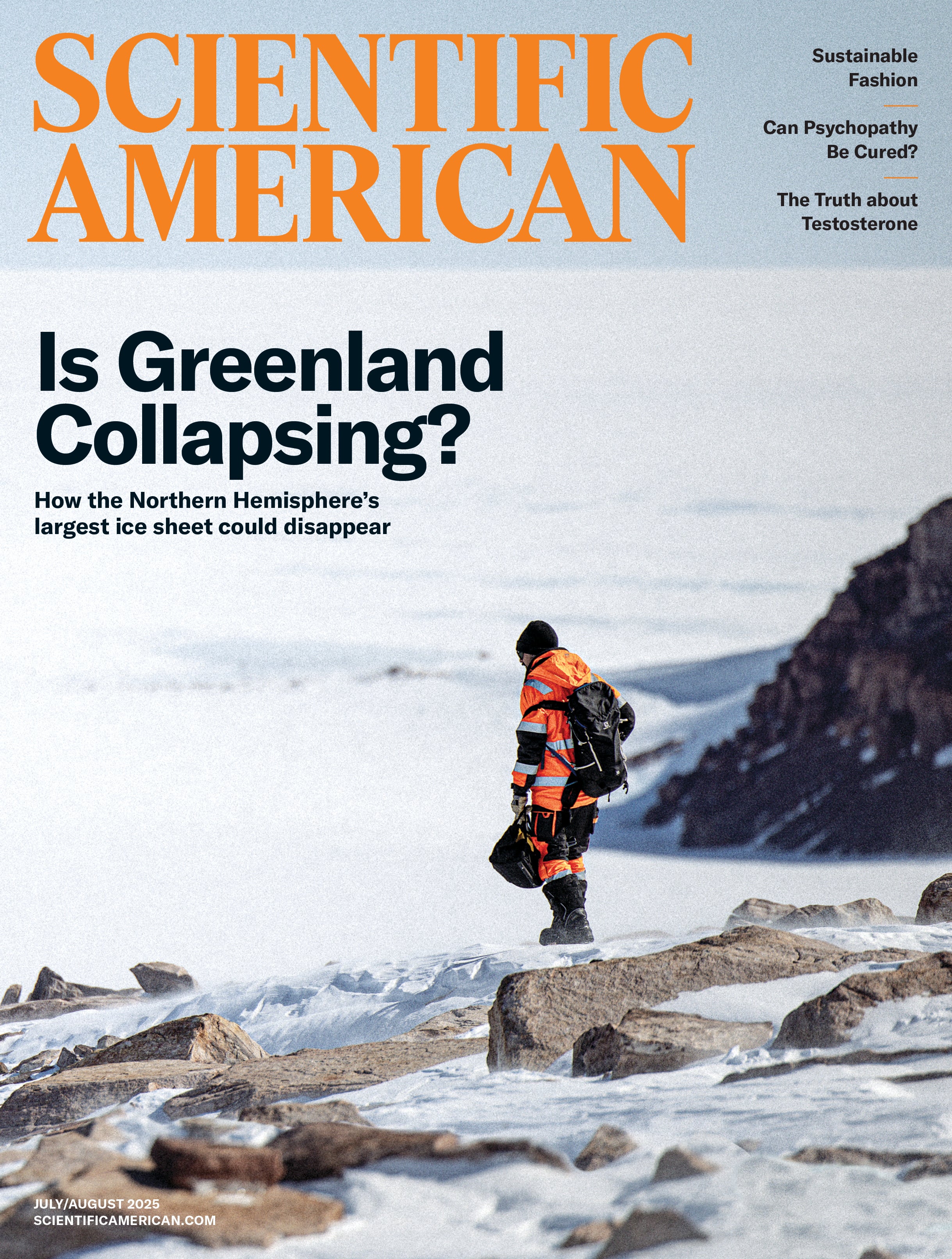
Scientific American Magazine (February 18, 2025):
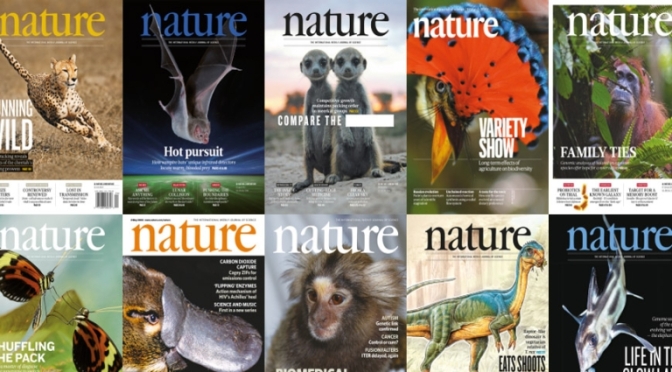
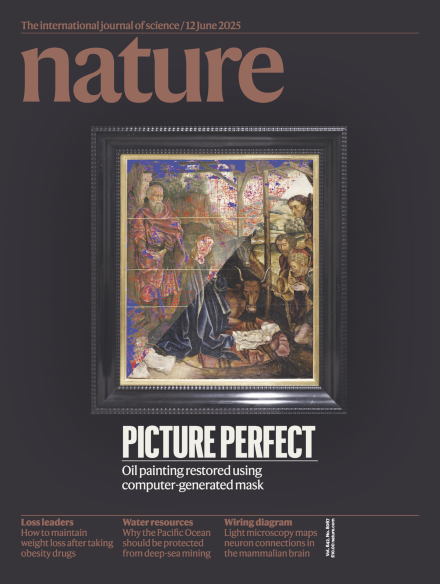
NATURE MAGAZINE (February 12, 2025): The latest issue features ‘Cosmic Catcher; – Deep sea telescope detects neutrino with highest energy ever recorded.
Process turns out eggs with delectable texture and high nutritional value.
The vaccines’ effect on inflammation-promoting cells might help to explain why the jabs protect against severe disease.
A Copper Age burial in Spain holds the largest collection of beads ever found ― enough to require a tonne of shellfish as raw material.
NATURE MAGAZINE (February 5, 2025): The latest issue features ‘Sight Unseen’ – Infrared capabilities of JWST reveal horde of previously undetectable asteroids…
Brain regions linked to the sense of smell in adults were activated in infants exposed to the odours of petrol, strawberry and more.
A flexible dart with a weighted tip can have 60% more kinetic energy than a rigid one, experiments show.
The large carnivores are spreading out of remote mountains and into areas settled by humans.
One of Jupiter’s biggest moons has the potential to harbour life in a subsurface sea. The nature of its core will provide information about that ocean.

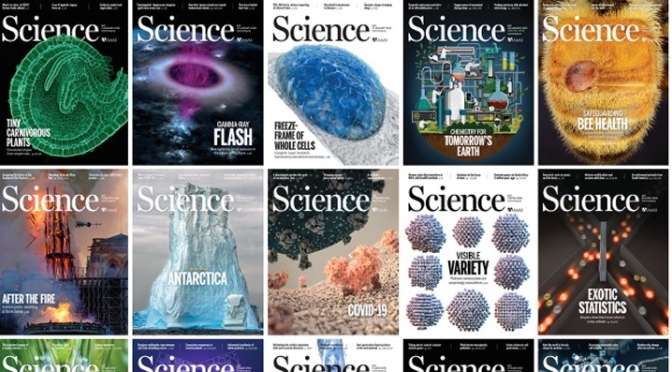
SCIENCE MAGAZINE (January 30, 2025): The latest issue features ‘Living With Tigers’ – Restoring a top predator across India…
Encouraging lab results bolster plans to harness a new kind of particle accelerator in x-ray sources
Surprise finding of few health payoffs complicates push to replace biomass fuel
Breakdown in collaboration leads many scientists to look to domestic projects—and to China
Even in some common species, the genetic variation key to resilience is slipping away
NATURE MAGAZINE (January 29, 2025): The latest issue features ‘Deposit Accopunt’ – How brine evaporation left sodium salts on the asteroid Bennu…
First estimate of its type shows that cultivated seaweed beds can accumulate as much carbon as some natural ecosys
Myostatin, which blocks muscle development, unexpectedly has an effect on ovulation in female mice.
Seeds, fruit stones and other remnants hidden in a Sydney barracks in the nineteenth century show residents’ deviation from the standard diet.

SCIENCE MAGAZINE (January 23, 2025): The latest issue features ‘Maniforld Males’ – Genetic orchestration of breeding morphs in ruffs…
Amid skepticism, companies bet that speed and innovation can realize fusion’s promise
Green hydrogen is key to decarbonizing the world. But the costly, finicky devices that make it need dramatic improvement
Survey-based studies linking diet patterns to health may be fatally flawed, paper suggests
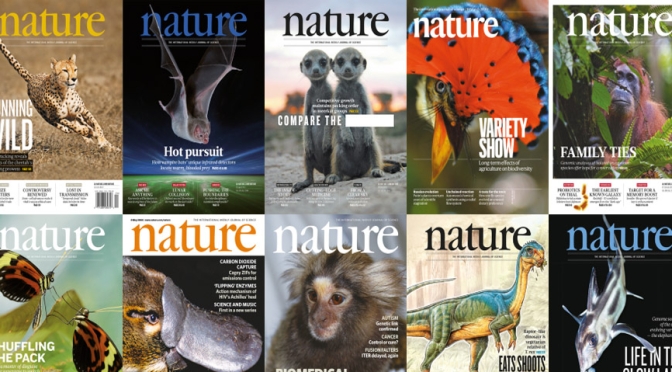
NATURE MAGAZINE (January 22, 2025): The latest issue features ‘Net Gains’ – Small-scale fisheries make major contribution to sustainable food, nutrition and livelihoods…
Vegetation clearing to extract nickel, which is used in renewable technologies, leads to greater carbon emissions than realized.
Blurry markings more than 1,000 years old become clear again thanks to scanning method.
Influenza viruses have not evolved resistance to suraxavir marboxil, which relieves cough, fever and other symptoms.
Model that predicts the spread of winning margins could be used to detect electoral interference.

SCIENTIFIC AMERICAN MAGAZINE (January 21, 2025): The latest issue features ‘A Cellular Revolution’ – Long-overlooked molecular blobs are transforming our understanding of how life works….
Tiny specks called biomolecular condensates are leading to a new understanding of the cell

SCIENCE MAGAZINE (January 16, 2025): The latest issue features ‘Shear Wonder’ – Chain-like materials manifest complex strain responses..
NATURE MAGAZINE (January 15, 2025): The latest issue features ‘Punk Rocks’ – Spiky 3D fossils add to the diversity of ancient molluscs…
Sensory organs on the walking legs of the male wasp spider can catch the scent of a female in a mood for romance.
Large language models can propose fine-tuning adjustments for an electron accelerator in Germany.
Blood vessels in the brain rhythmically constrict and dilate to drive waves of cleansing fluid through the organ.
Dust cloud is thought to be the first debris disk to be seen around a planetary nebula.