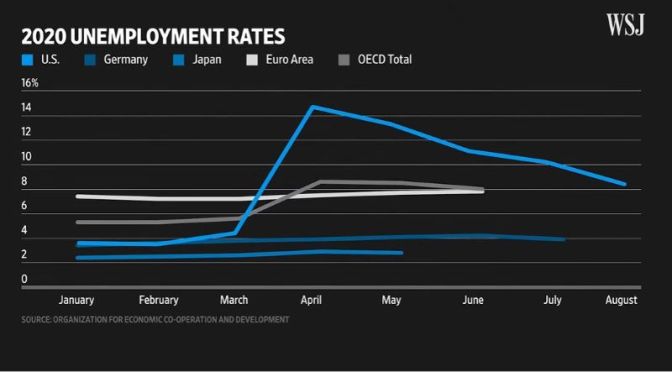
The U.S. unemployment rate shot up faster than in any other developed country during the pandemic. WSJ explains how differences in government aid and labor-market structures can help predict how and where jobs might recover.
Lawmakers are back on the hill negotiating the next trillion dollar relief package for the struggling economy. Meanwhile, COVID-19 cases surge in 40 states. Finally, an update on the clash between protesters and police in Portland, Oregon.
Buildings are getting tested for coronavirus, too. Research teams in Oregon are conducting real-time coronavirus tests on ventilation systems in buildings that could be essential for returning to the office or school.
Plus, small businesses are facing an existential threat.
And, in a rare move, the Trump administration rescinds a recent guideline that would have sent hundreds of thousands of international students packing.
Guests: Axios’ Joann Muller, Dion Rabouin, and Mike Allen.
Economists have long used letters of the alphabet like V and U to describe economic recoveries. But the coronavirus downturn is so different from past recessions that economists are coming up with new shapes to describe the potential recovery. WSJ explains.
Syndicated columnist Mark Shields and New York Times columnist David Brooks join Judy Woodruff to discuss the week in politics, including President Trump’s call to reopen houses of worship despite the pandemic, controversial comments from Trump and former Vice President Joe Biden, public opinion on reopening the country, the battle over mail-in voting and Trump’s firing of inspectors general.
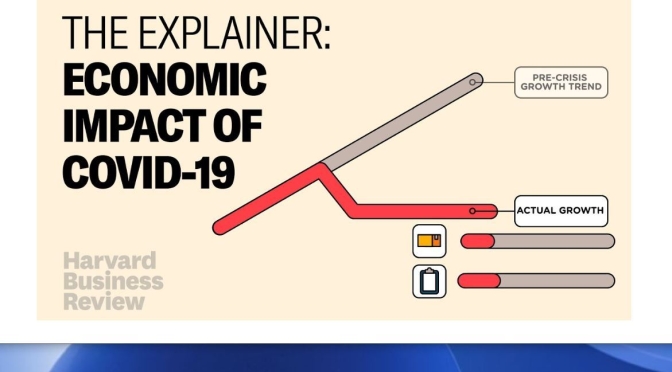
Predicting the path ahead has become nearly impossible, but we can speculate about the size and scale of the economic shock. Economic contagion is now spreading as fast as Covid-19 itself. Social distancing, intended to physically disrupt the spread, has severed the flow of goods and people, stalled economies, and is in the process of delivering a global recession.
Predicting the path ahead has become nearly impossible, as multiple dimensions of the crisis are unprecedented and unknowable. Pressing questions include the path of the shock and recovery, whether economies will be able to return to their pre-shock output levels and growth rates, and whether there will be any structural legacy from the coronavirus crisis.
This Explainer explores several scenarios to model the size and scale of the economic shock and the path ahead.
Based on the HBR article by Philipp Carlsson-Szlezak, Martin Reeves and Paul Swartz
Syndicated columnist Mark Shields and New York Times columnist David Brooks join Judy Woodruff to discuss the week’s news, including former Vice President Joe Biden’s new public denial of a sexual assault allegation against him, congressional action in response to the COVID-19 pandemic and where the country stands on lifting business restrictions and stay-at-home orders.
News, Views and Reviews For The Intellectually Curious


 Lawmakers are back on the hill negotiating the next trillion dollar relief package for the struggling economy. Meanwhile, COVID-19 cases surge in 40 states. Finally, an update on the clash between protesters and police in Portland, Oregon.
 Buildings are getting tested for coronavirus, too. Research teams in Oregon are conducting real-time coronavirus tests on ventilation systems in buildings that could be essential for returning to the office or school.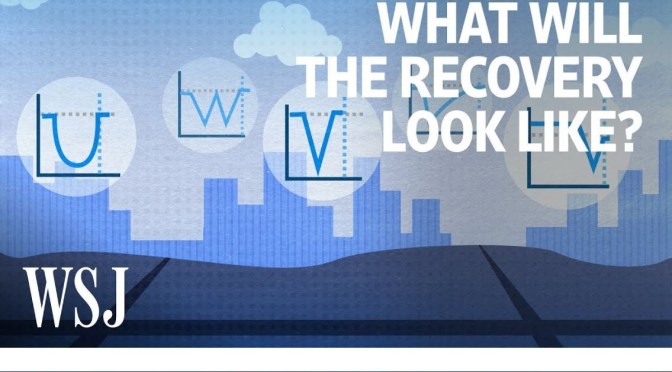
 Economists have long used letters of the alphabet like V and U to describe economic recoveries. But the coronavirus downturn is so different from past recessions that economists are coming up with new shapes to describe the potential recovery. WSJ explains.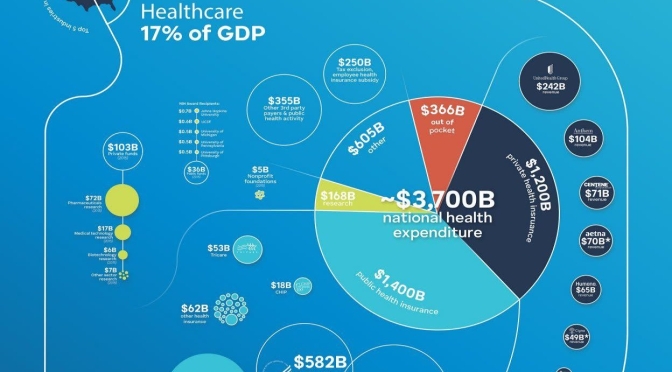


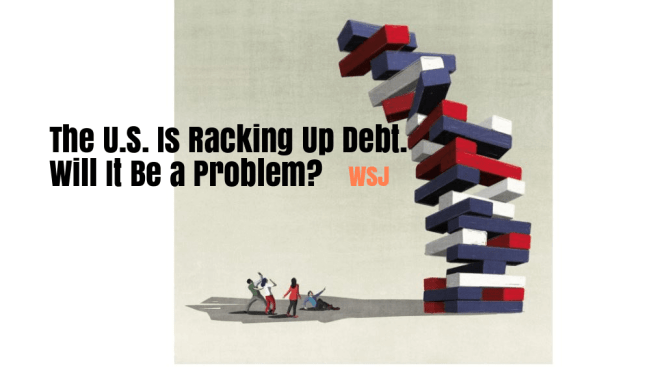
 The federal government is spending big to combat the economic damage of the coronavirus crisis, and federal debt has climbed to record levels.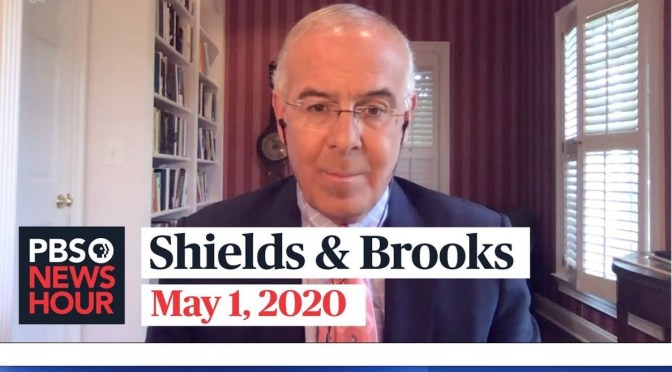
 Boomers Daily