

 NPR’s Tamara Keith and Amy Walter of the Cook Political Report join Judy Woodruff to discuss the latest political news, including whether two weeks of public impeachment hearings have shifted public opinion about President Trump and the investigation into his Ukraine policy, potential pressure on Republican lawmakers and the late entrance of Michael Bloomberg into the 2020 Democratic race.
Tag Archives: Podcasts

Media: “The Rise Of Netflix – An Empire Built On Debt” (The Guardian Podcasts)
 Netflix has risen from obscurity to be one of the most powerful media companies in the world with more than 150 million global subscribers. It has launched critically acclaimed hits such as House of Cards, The Crown and Unbelievable, as well as showcasing the back catalogues of popular television series. But as part of its rapid growth, the company has racked up huge debts.

Joining Anushka Asthana to discuss the long-term sustainability of Netflix are the TV critic Mark Lawson and the Guardian’s deputy business editor Dan Milmo.
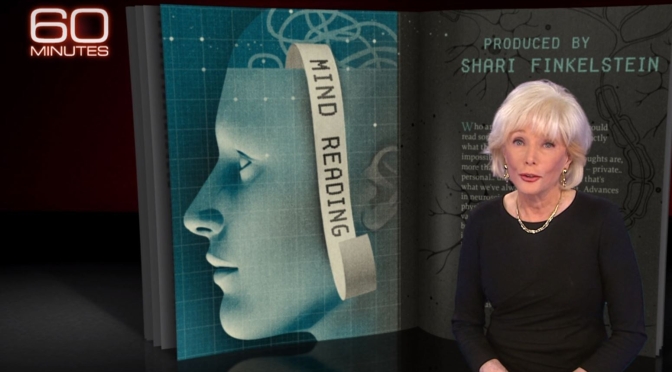
Brain Science Podcasts: MRI Scans Now Reveal “Thoughts And Feelings” (60 Minutes)
 Who among us hasn’t wished we could read someone else’s mind, know exactly what they’re thinking? Well that’s impossible, of course, since our thoughts are, more than anything else, our own. Private, personal, unreachable. Or at least that’s what we’ve always, well, thought.
Advances in neuroscience have shown that, on a physical level, our thoughts are actually a vast network of neurons firing all across our brains. So if that brain activity could be identified and analyzed, could our thoughts be decoded? Could our minds be read? Well, a team of scientists at Carnegie Mellon University in Pittsburgh has spent more than a decade trying to do just that. We started our reporting on their work 10 years ago, and what they’ve discovered since, has drawn us back.
To read more: https://www.cbsnews.com/news/functional-magnetic-resonance-imaging-computer-analysis-read-thoughts-60-minutes-2019-11-24/

Crime And The Elderly: “The $340,000 Robocall Scam” (WSJ Podcast)
 It started with a phone call. In a week, a scammer would take Nina Belis’s life savings. WSJ’s Sarah Krouse explains why robocalls persist: Because sometimes they work.

Top Political Podcasts: Mark Shields And David Brooks On The Latest In Washington (PBS)
 Syndicated columnist Mark Shields and New York Times columnist David Brooks join Judy Woodruff to discuss the week in politics, including the biggest revelations and most compelling characters from impeachment hearings, whether they will change voters’ minds about impeachment, how 2020 Democrats performed in their fifth debate and President Trump’s moves on military justice.
World Affairs Podcasts: “Is NATO Eperiencing ‘Brain Death’?” (The Economist)
 The secretary general of the North Atlantic Treaty Organisation, Jens Stoltenberg, reacts to Emmanuel Macron’s stark warnings about the future of the alliance. Daniel Franklin, The Economist’s diplomatic editor, asks Mr Stoltenberg how NATO’s members can overcome their differences—should Europe have its own defence force and is Turkey at risk of drifting away from the alliance? Also, how should Article 5 be enforced in space?

Top Science Podcasts: Tracking Landslides In Taiwan, The Universality Of Music (ScienceMag)
 You may have seen the aftermath of a landslide, driving along a twisty mountain road—a scattering of rocks and scree impinging on the pavement. And up until now, that’s pretty much how scientists have tracked landslides—roadside observations and spotty satellite images. Now, researchers are hoping to track landslides systematically by instrumenting an entire national park in Taiwan. The park is riddled with landslides—so much so that visitors wear helmets. Host Sarah Crespi talks with one of those visitors—freelance science journalist Katherine Kornei—about what we can learn from landslides.
In a second rocking segment, Sarah also talks with Manvir Singh about the universality of music. His team asked the big questions in a Science paper out this week: Do all societies make music? What are the common elements that can be picked out from songs worldwide? Sarah and Manvir listen to songs and talk about what love ballads and lullabies have in common, regardless of their culture of origin.
To read more: https://www.sciencemag.org/podcast/building-landslide-observatory-and-universality-music
World Affairs Podcasts: “The Heavy Hand” Of China, Disruption At McKinsey, Swiss Hoarding Coffee
 A SELECTION of three essential articles read aloud from the latest issue of The Economist. This week, Hong Kong is not the only part of China’s periphery to resent the heavy hand of the Communist party. [9:20] What happens when McKinsey, the high priesthood of management consultancy, is itself disrupted? [16:51] And, if disaster strikes, the Swiss want to be caffeinated. Runtime: 20 min
Top Science Podcasts: A New Antibiotic From Nematodes, “Grants” Thru Lotteries (Nature)
 Benjamin Thompson brings you the latest science news. This week, an antibiotic that targets difficult to treat bacteria, and a roundup of the latest science news.
In this episode:
00:49 Discovering darobactin
Researchers looked inside nematode guts and have identified a new antibiotic with some useful properties. Research Article: Imai et al.
05:45 Research Highlights
Using urine as a health metric, and sniffing out book decay with an electronic nose. Research Article: Miller et al.; Research Article: Veríssimo et al.
07:54 News Chat
Adding an element of chance to grant funding, a continental butterfly-sequencing project, and tracking endangered animals via traces of their DNA. News: Science funders gamble on grant lotteries; News: Every butterfly in the United States and Canada now has a genome sequence; News: Rare bird’s detection highlights promise of ‘environmental DNA’
To read more: https://www.nature.com/articles/d41586-019-03588-z

Beverage Podcasts: As Beer Sales Slow, Coors And Budweiser Up Attacks Against Each Other (WSJ)
 A 2019 Super Bowl ad kicked off a showdown between the maker of Bud Light and the maker of Coors Light. WSJ’s Jennifer Maloney explains how that standoff has led to accusations of corporate espionage, two lawsuits and questions about the future of the beer industry.
 Boomers Daily