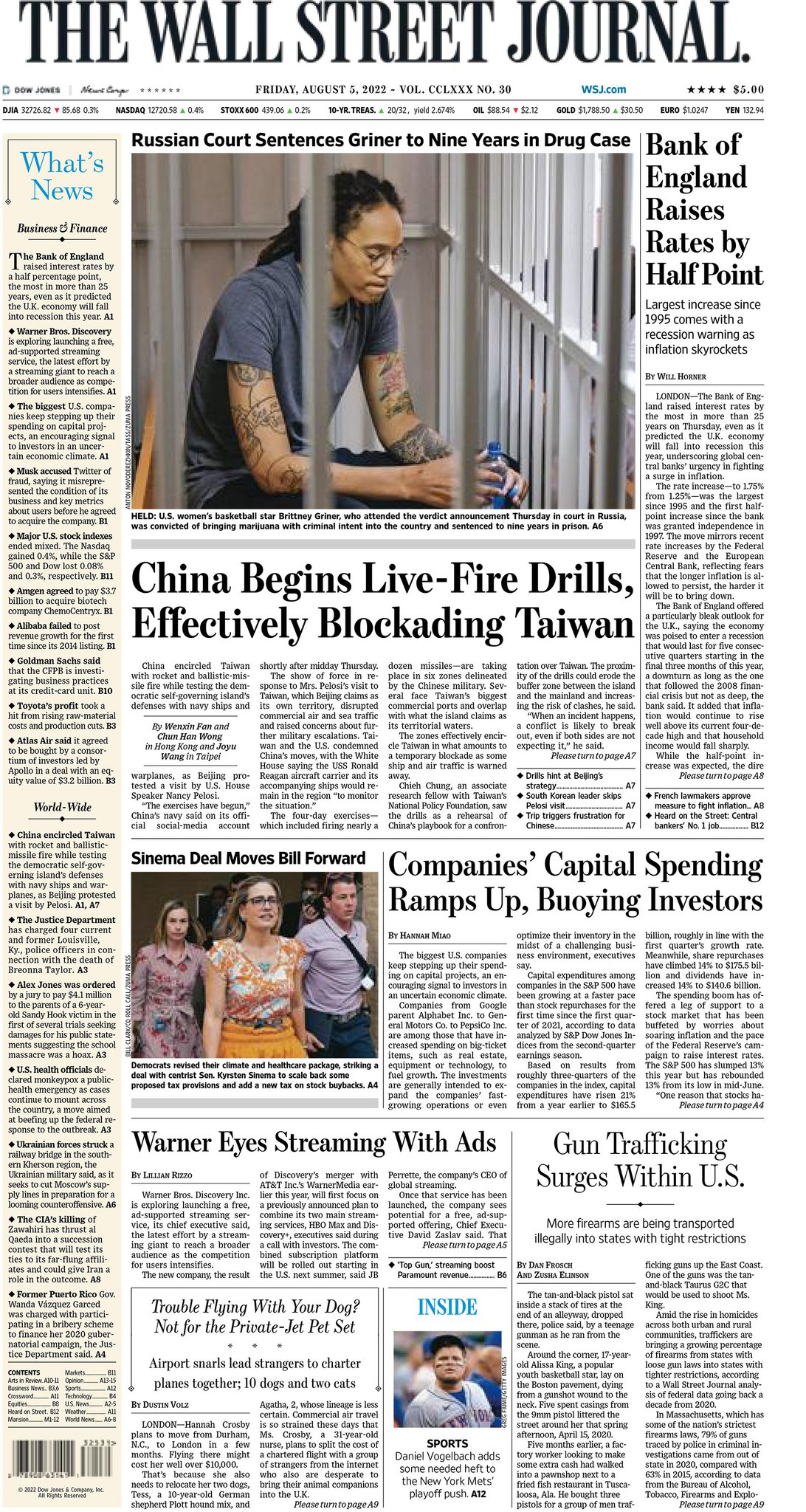
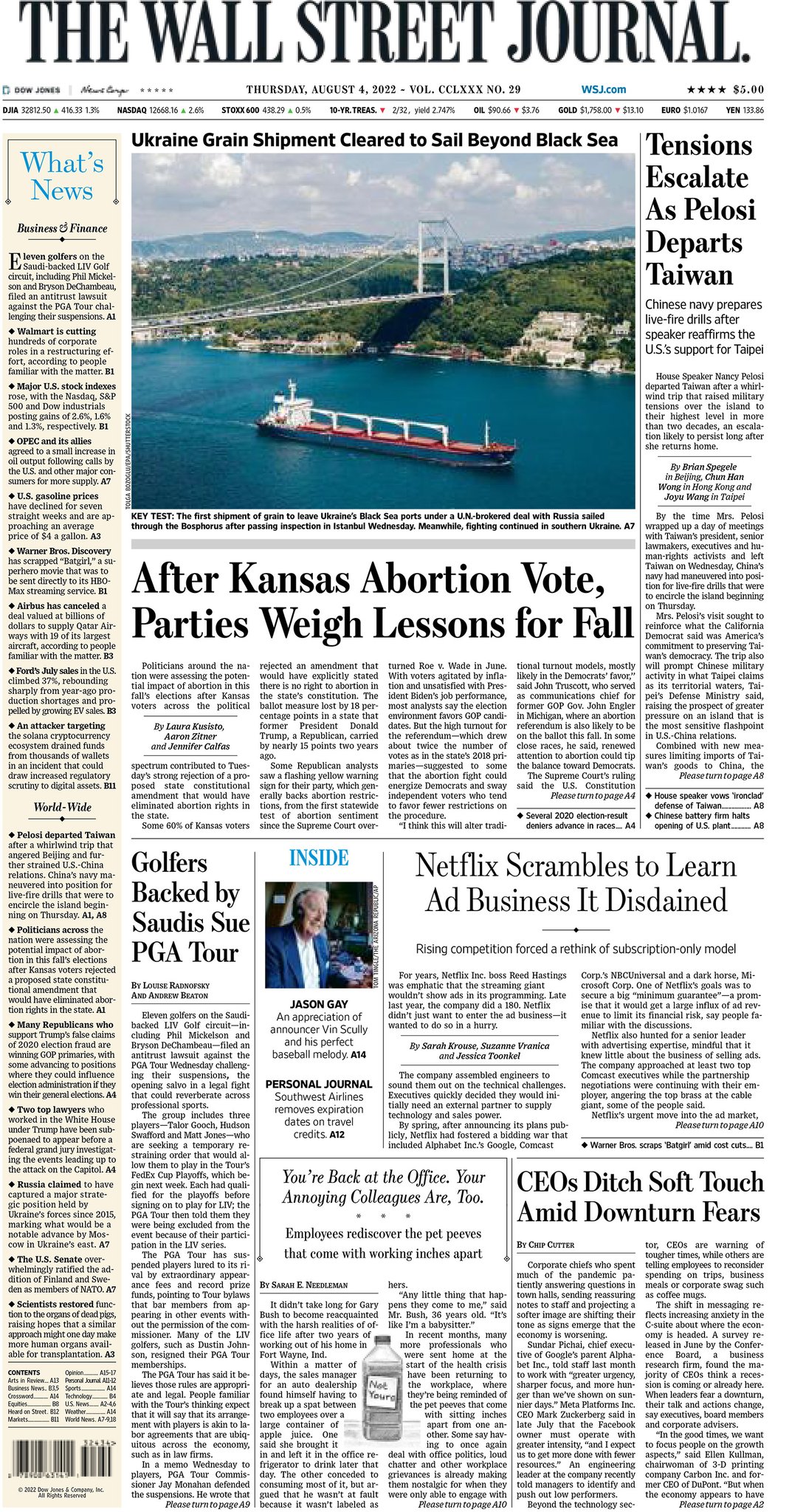
The U.S. jobs market likely cooled again in July, economists estimate, as the economy faltered under the weight of high inflation and Federal Reserve interest-rate increases to cool demand.
House Speaker Nancy Pelosi said the U.S. would continue engaging with Taiwan, while Japan’s prime minister called on China to immediately halt its military exercises around the island.
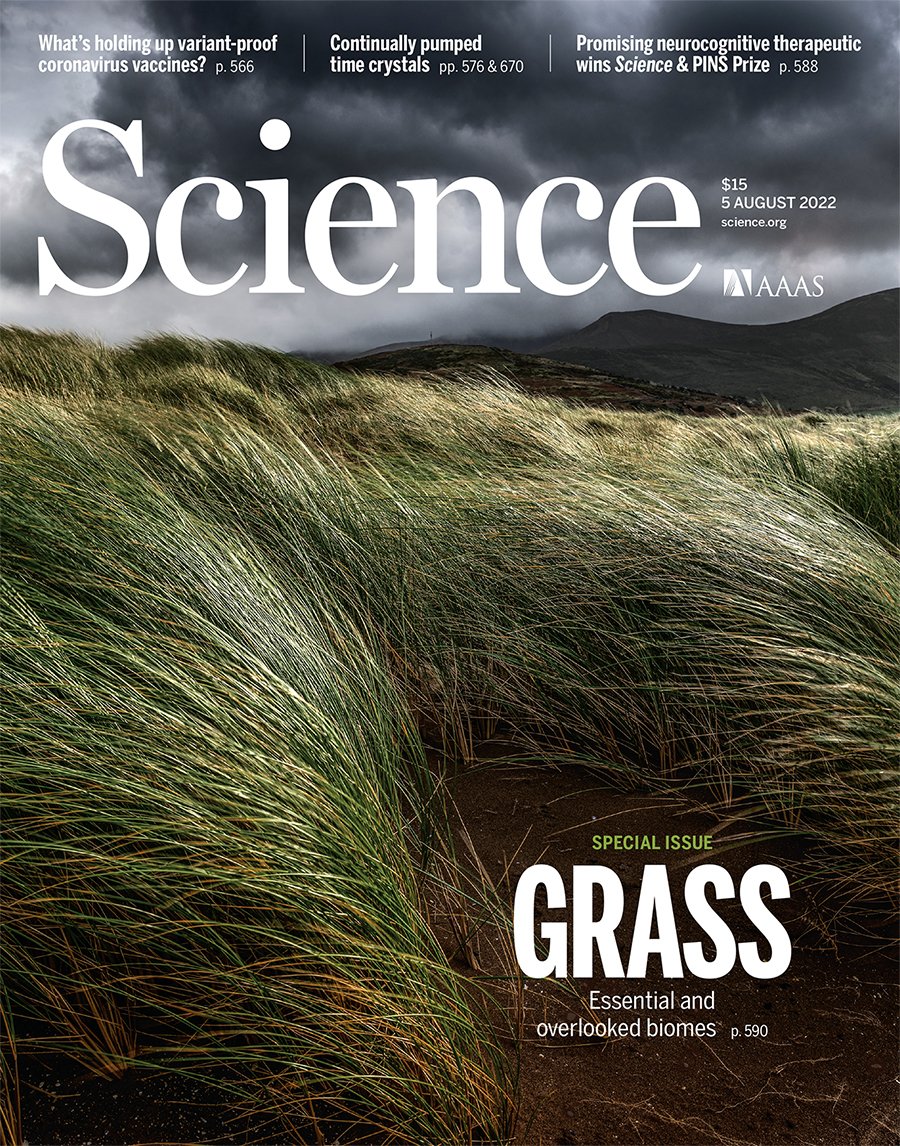
Marram grass, or beachgrass, grows on and stabilizes coastal sand dunes on Ireland’s Dingle Peninsula. Grasses, whether terrestrial or submarine, tend to be undervalued but have influenced the trajectory of human history through their domestication as food staples, as well as natural ecosystems worldwide. If restored and conserved appropriately, grasslands can benefit climate change mitigation efforts. See the special section beginning on page 590.
A new special issue of Science explores the unrecognized value of grass: https://fcld.ly/bo80dpr
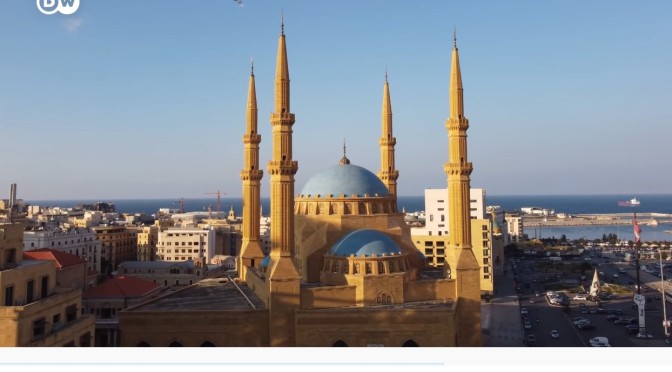
Lebanon is now going through the worst economic crisis in its history. 80 per cent of the population lives below the poverty line. In one year, food prices have jumped 500 per cent due to galloping inflation. Lebanon was long regarded as the Switzerland of the Middle East.
But those days are gone. A series of crises have plunged the nation into the abyss. And its people are suffering. For Riad, who runs a grocery store in the suburbs of Beirut, business has become hellish. Every morning, calculator in hand, he changes the labels of his products according to the day’s exchange rate. An operation made all the more complex by the fact that his store is plunged into darkness, due to a lack of electricity.
The Lebanese government no longer provides more than two hours of electricity per day in the country. It is impossible for the population to heat, light or use their refrigerators. Taking advantage of the situation, a network of private generators has emerged. The Lebanese pound, the local currency, has lost 90 per cent of its value.
The only people unaffected are those paid in dollars. The greenback, which can be exchanged for a small fortune against the local currency, has created a new privileged social class in the country. A salesman in an international pharmaceutical company, Joseph lives like a king in a ruined Lebanon. Thanks to his new purchasing power, he repaid his mortgage in two months, instead of… twenty years!
In a bankrupt state, plagued by corruption, six out of ten Lebanese now dream of leaving the country. In Tripoli, in northern Lebanon, Mohammed and his son set out for Germany by sea. Even though the trip was cut short off the Turkish coast, the young father is still ready to take all possible risks to reach the European Eldorado.
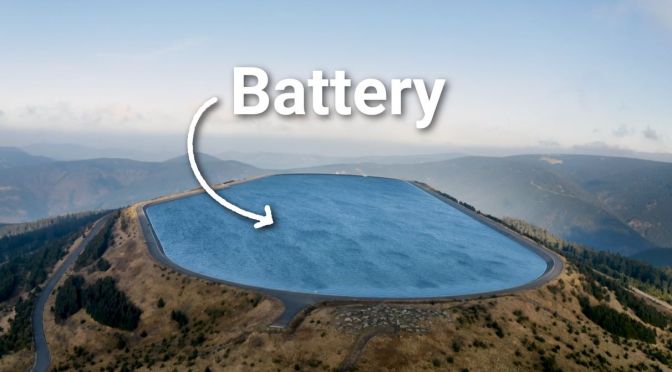
As the planet gets hotter, engineers are racing to find ways to store energy on a massive scale, clearing the way for a transition to renewable electricity.
“Tier Drops,” by Lisa Owens Viani. Regulations and apportioning that were set up 100 years ago are under pressure as the Colorado River shrinks. As climate change accelerates and record-breaking drought worsens, cities, tribes, and industries must prepare for a future with less water. (Online August 10)
It’s past time to get real about the Southwest’s hardest-working river.
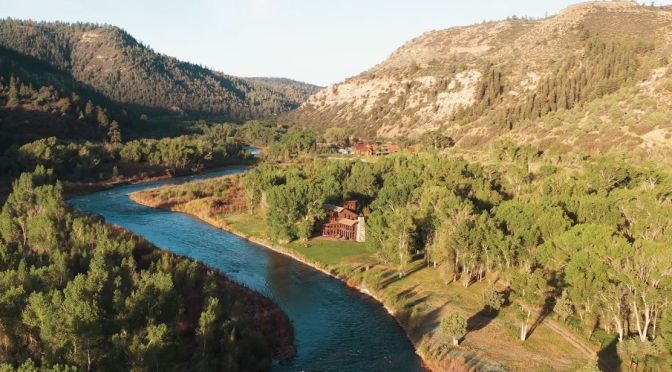
About 40 million people rely on the Colorado River as it flows from Wyoming to Mexico. But overuse and climate change have contributed to its reservoirs drying up at such a rapid rate that the probability of disastrous disruptions to the deliveries of water and hydroelectric power across the Southwest have become increasingly likely. Now the seven states that depend on the river must negotiate major cuts in water use by mid-August or have them imposed by the federal government.
Those cuts are merely the beginning as the region struggles to adapt to an increasingly arid West. The rules for operating the river’s shrinking reservoirs expire in 2026, and those seven states must forge a new agreement on water use for farmers, businesses and cities.
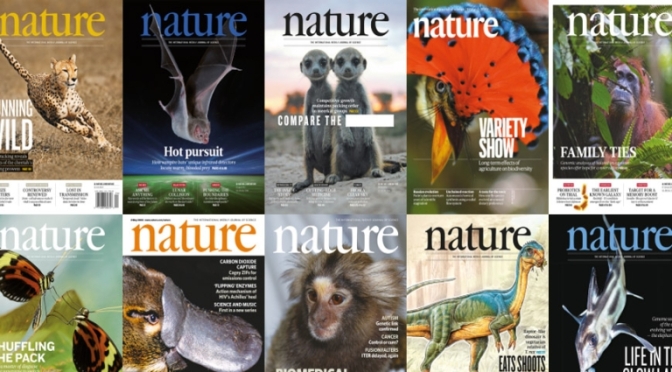
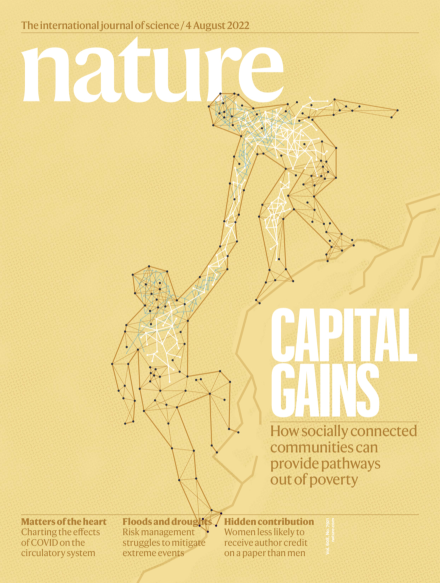
An individual’s social network and community — their ‘social capital’ — has been thought to influence outcomes ranging from earnings to health. But measuring social capital is challenging. In two papers in this week’s issue, Raj Chetty and his colleagues use data on 21 billion friendships from Facebook to construct a Social Capital Atlas containing measures of social capital for each ZIP code, high school and college in the United States. The researchers measure three types of social capital: connectedness between different types of people, social cohesion and civic engagement. They find that children who grow up in communities where people of low and high socio-economic status interact more have substantially greater chances of rising out of poverty. The team then examines what might limit social interactions across class lines, finding a roughly equal contribution from lack of exposure — because children in different socio-economic groups go to different schools, for example — and friending bias, the tendency for people to befriend people similar to them.
China conducts live-fire military drills. Plus: Sri Lanka’s new economic plan, an alliance between Italy’s centre-left and centrists, and Japan’s ‘roll-the-dice train’.
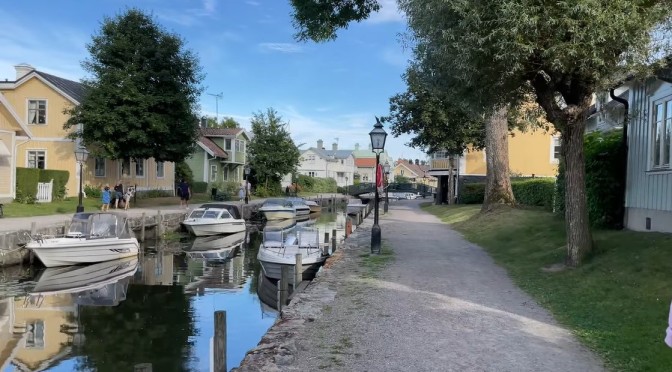
Trosa, a small town by the Baltic sea that sleeps through the winter. During summer the whole town suddenly wakes up and becomes a bustling meeting point. People arrive in masses; city dwellers come looking for some peace and quiet in their summer cabins in the area, and foreigners visiting the town on their vacation to Sweden.
With the nickname “Världens ände”, translated from Swedish to mean the world’s end, this charming coastal town attracts visitors of the more unknown kind as well as the cultural elite. Don’t be surprised if you run into the Swedish prince Carl Philip or one of the guys from ABBA in the queue at the grocery store. Word has it that they are all very sympathetic people.
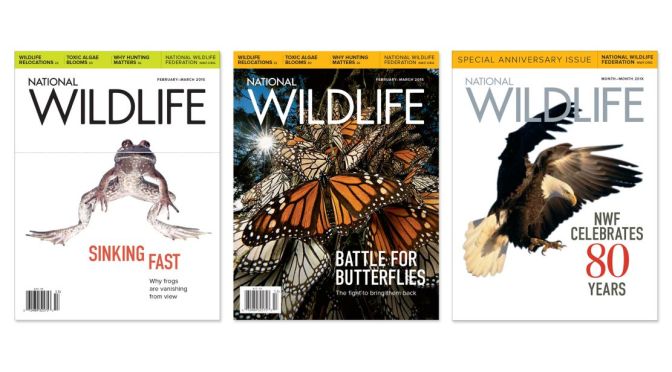
Heat, drought and wildfires are ravaging western wildlife while conservationists try to help ecosystems adapt
By Brianna Randall – Conservation, Aug 02, 2022
Dead mussels lie along the Pacific shore of Vancouver, British Columbia, during 2021’s summer heat wave. Scientists estimate that the record-breaking heat killed more than 1 billion marine animals off the coasts of British Columbia and Washington state. (Photo by Christopher Harley/University of British Columbia)
GASPING SALMON WITH INFECTED LESIONS. Emaciated deer searching sagebrush flats for water. Clams and mussels boiled to death in their shells. Last summer, temperatures in the Northwest soared to record highs in the triple digits, killing more than 1 billion marine animals in the Salish Sea and stressing wildlife from the Pacific to the Rocky Mountains. Simultaneously, ongoing drought in the Southwest—which began in 2000 and is the region’s driest 22-year period in 1,200 years—is causing plants to wither, springs to dry up and wildfires to engulf entire landscapes.
News, Views and Reviews For The Intellectually Curious






 Boomers Daily